


Why do some people build real wealth while others—working just as hard—only scrape by? With endless “expert” advice everywhere, the real drivers of financial success can be hard to spot. This week, we sit down with entrepreneur, investor, and author Gino Barbaro for a conversation that goes far beyond market timing and tactics. Having scaled a real estate portfolio to over 1,800 multifamily units, Gino unpacks the often-overlooked connection between childhood money experiences, family values, and building a lasting legacy. Drawing from classics like The Richest Man in Babylon and his own journey from running a pizza shop to leading a real estate empire, Gino explains how to move past fear-based decisions, adopt the “Warrior” and “Magician” business archetypes, and define success on your own terms.
In this post, you’ll learn:
- Why financial wealth is only one pillar of true legacy
- How early money memories shape adult financial behavior
- A framework for focused execution and avoiding shiny object syndrome
- Why Gino stepped back from syndication to build a “Small Giant” business
- How to guide children toward financial independence without authoritarian control
If you’re ready to rethink money, leadership, and legacy—at work and at home—dive into our conversation with Gino.
Get in touch with Gino Barbaro:
Website: https://barbaro360.com/
LinkedIn: https://www.linkedin.com/in/gino-barbaro-03973b4b
Facebook: https://www.facebook.com/groups/barbaro360
Instagram: https://www.instagram.com/barbaro_360/
YouTube: https://www.youtube.com/@barbaro-360
If you are interested in learning more about passively investing in multifamily and Build-to-Rent properties, click here to schedule a call with the CPI Capital Team or contact us at info@cpicapital.ca. If you like to Co-Syndicate and close on larger deals as a General Partner, click here. You can read more about CPI Capital at https://www.cpicapital.ca.
#avabenesocky #augustbiniaz #cpicapital
—
Watch the episode here
Listen to the podcast here
Important Links
- Gino Barbaro
- Happy Money, Happy Family, Happy Legacy
- The Richest Man in Babylon
- Small Giants
- Unstoppable Culture
- The 7 Habits of Highly Effective People
- Gino Barbaro Email
About Gino Barbaro
 Gino Barbaro is an investor, Certified Money Coach®, entrepreneur & podcast host. As an entrepreneur, he has grown his real estate portfolio to over 1,800 multifamily units & $450,000,000 in Assets under management.
His mission, through Barbaro 360, is to empower families to build lasting legacies by focusing on restoring traditional values in family life, finance, and helping families create a healthier relationship with money.
Gino is the best-selling author of Happy Money Happy Family Happy Legacy. He resides with his beautiful wife Julia and their six children in St. Augustine, Florida.
Money Mindset, Financial Literacy & Real Estate Investing Tips – Gino Barbaro
I made a little bit of a joke before the show. I said, “August, it’s date day today. Date night. Most people go out to a restaurant. You and I have a podcast.”
I know. Get all dressed up. I put a lot of cologne on. People cannot smell me, but I smell really good.
I walk out of the bathroom, and August goes, “Wow. Oh my gosh, honey.”
Yeah, I know. I’m like, “Wow, you look amazing, but we’ve got to go and record an episode.” It’s fun, but the purpose of this show is not only adding value to ourselves from bringing these expert guests on and learning from them. It’s also important to add value to our audience, the people who follow us, our investors. Every week our real estate weekly newsletter that goes out on every Sunday at 6:00 AM includes our episode that we did in the prior week. This will go out in a couple of weeks to our audience.
It is to add value to our audience and to keep us sharp and the lessons that we learned. For the show, we’re bringing on a guest who’s been on the show in the past. It’s rare to bring on a guest again, but we really felt that this guest was someone that added a lot of value to us, we learned from a lot from over the years. He’s made some serious steps in life, he’s taken some serious action and major decisions that really motivates us that we’re on the right path. Me and you have made some serious choices by leaving our careers, starting CPI, moving from Canada to the US.
Another thing that makes our guest today very special is he doesn’t just talk about business or making a lot of money, he really talks about how you can have it all. That’s tying in a successful business with also building a successful family. That’s something that’s near and dear to our hearts and I’m sure a lot of people that are reading as well because it is extremely challenging to build a business and also be very present with your family.
We have two kids, and you have the stresses of making money and building a great business. You also have the stresses of making sure you do the right things for your kids so that they can have a successful life as well. It’s a lot. I know our kids are young right now, but it’s just going to get more and more as they get older.
I want to jump in here quick because this idea you said the word family. This concept of family has been watered down. The idea of family, at least the Western family, is that, you turn eighteen, you get out, you find your own life. The Eastern cultures, some European cultures are a lot different. I lived with my mom until I was 38 years old. Just to be cool in front of girls, I said my mom lives with me. I love that idea of family, but unfortunately it was watered down.
Now what I’m noticing a lot of supreme beings, a lot of these super successful and super-focused people, they’re going back to those ideas of making sure their family, and these are some of these are billionaires, some of them are guests that’s on our show, Gino, that they’re bringing family in. He lives on a five-and-a-half-acre property and he’s got his family with him. What’s more beautiful than that concept? You see that happening all the time. A lot of times, I watch these highly successful, ultra-wealthy, billionaire types and they’re bringing their family close, they’re not pushing their family away.
That’s what power that be wants. They want you to push the family out so they create housing formations, they go out there and they have to create buy a house, have a family so they can go and work. This idea of keeping them at home doesn’t go with the grain that they want. Anyways, let’s just bring our guest in because we’ve done a lot of talking here, but go ahead.
We’re so excited. Awesome. Okay, quick introduction about our guest, Gino Barbaro. I’m going to give you guys his bio. He’s truly incredible. He’s an Investor, Certified Money Coach, Entrepreneur, and Podcast Host. As an Entrepreneur, he has grown his real estate portfolio to over 1,800 multifamily units and $450 million of assets under management.
His mission through Barbaro 360 is to empower families to build lasting legacies by focusing on restoring traditional values in family life, finance, and helping families create a healthier relationship with money. Gino is the best-selling author of Happy Money, Happy Family, Happy Legacy. He resides with his beautiful wife Julia and their six children in St. Augustine, Florida. Welcome to the show, Gino.
Thanks, guys, for having me on. One thing you said early on that really makes me cringe when I hear people say is the word expert. I don’t ever want to be considered an expert. The reason why is we’ve seen over the last few years what experts have done. They come in and they have this paradigm. They have this idea where they think they know it all. Inflation is transitory. Tariffs aren’t going to work. The economy is slowing down. I think they look at life as being stagnant and as being part of the status quo.
If and when I start thinking that way, I’m like, “I think I know it all. I don’t need to learn anything new.” That’s when we get into trouble. I think the smart person learns from their mistakes, the wise person learns from someone else’s mistakes. I’d like to be someone who’s wise where I’m like, “Okay, that person is doing this.”
A smart person learns from their own mistakes; a wise person learns from someone else’s mistakes. Share on XWhen you think and hear about the expert, like that expert is just so rigid. Obviously, after 30 or 40 years into an industry, you probably see things. As you both know, there’s been such massive disruption and change in every industry over the last few years. Multifamily hasn’t changed as much as it should, but still with the introduction of AI, with the ability to disrupt certain things, I just think anybody out there who considers themselves an expert, I just don’t like that word. I don’t know how you guys feel about that.
For sure. Self-proclaimed experts are a lot different than an expert who’s been anointed. I feel that if we’re learning from you and you’ve been in the game and you’ve stayed resilient and steadfast so that in our opinion is definitely, I’ve been some to some of your events when there was hundreds, possibly thousands of people there. You had yourself and an expert guest. You’ve brought on a lot of value to people here in Orlando, I remember being at one of your events, the Jake and Gino events. Going back to the basics, before getting into real estate, we really wanted to chat about financial literacy. Ava and I, who’s my partner co-host of the show, but happens to be also my wife, we do spend a lot of time together.
Also, joint partner.
Exactly. We do we do spend a lot of time together. Maybe not a smoking cigars partner. You have smoked cigars with me before, but have been pregnant a lot of time over the last couple of years. Going back to financial literacy, very important in life. You’ve even quoted some biblical lines about financial literacy and leaving a legacy and leaving money to your children at some point. You’ve mentioned that I remember one of the podcasts I was listening to you, Gino.
Going there and discussing it, Ava and I have put some time aside for reading books. One of the books we’re reading is a book that you’ve quoted many times and you’re a practitioner of, which is The Richest Man in Babylon. We’re reading the book but we’ve just read a couple of chapters only, but only just first few chapters has taught us so much and Ava’s quoting it. Who were the main characters?
Bansir and Arkad.
Yeah, she’s been quoting them all the time and talking about it. Let’s start there. Let’s talk about the importance of financial literacy and what it means to you and defining that term for us.
Defining Financial Independence & The 3 Pillars Of Legacy
It’s interesting because when I think of financial independence or financial freedom, I have this certain map or this certain picture in my mind. As you’re reading this, everyone has their own. Some people may say, “I’m going to quit my job.” Some others may say, “I love my job, but I don’t have to go do my job.” For me, financial freedom was I can afford to take care of my wife’s dental work without freaking out about a bill. I can just maybe decide not to work today.
I can decide who I want to work with, when I want to work with, where I want to work with. That is to me what financial independence was. Let’s take a dive into the deep end of the pool right now because we’re talking about financial independence, but it really comes down to your values. You need to make decisions based upon your values, what financial independence looks like for you. If you’re a couple, if you’re a family, you have to ultimately think about the legacy component of it.
I have something called the three pillars of legacy. Legacy is important to talk about because as we’re building all of this stuff, why are we building it? What’s the end result? Most of us don’t think about that. We start building something and we’re five years into it and we’re like, “I didn’t really like that. I didn’t know why I did that.” It’s understanding you need to flush it out on the front end. When you think about legacy, people think about legacy as something that you leave.
I had a really excellent author, his name is Bill High. He wrote a book with David Green. His idea of legacy is something that you set in motion. To me, that changed everything. I was like, “That’s amazing,” because it’s something that I can start doing now. I can start planning for it now. I don’t have to wait because for most entrepreneurs and people who are successful with money, we’re afraid that at some point, we may create entitled children, spoiled children.
We may be afraid of actually passing our financial life on to the next generation. That’s the problem with legacy. That’s where most entrepreneurs are only focused on. They’re only focused on the financial aspect. That’s one pillar. The second pillar is the family or the values aspect of it. The third pillar would be the relationships or the networking aspect of it. When you put all three of those together, it’s so incredible because you start having these conversations with your children.

Money Mindset: The three pillars of legacy are the financial, family and values, and relationships or networking aspects. When you bring all three together, it’s incredibly powerful.
For all the entrepreneurs out there, I know I hear this all the time. I always hear, “I’m doing this for the kids.” How many of you asked the kids, is that what they want you to be doing? It’s really interesting. You have to understand, am I doing this for myself, which is okay, or am I doing this for my kids? The second component with that would be, “I want to create this amazing legacy for my children.”
How do I start introducing this to my kids? How do I involve them without being overbearing, without trying to push them into something that may not be their genius or may not be what they want to do? At the same time, you need to teach them those skills about money because you’re a financial steward of it, you’re going to be giving it on to the next generation and hopefully, as in the book of Proverbs it says, “A good man leaves an inheritance to his children’s children.”
As you set this legacy in motion, it’s not only to this next generation, it’s hopefully to your grandkids and your great-grandkids. That just starts a whole process of you said, August, the family. The family is really important, being open and honest with the family and allowing them to grow within and find their way within the family. That’s a difficult thing for parents to do to say, “You choose your path,” whereas most Europeans, I’m Italian, parents were very controlling.
They were able to tell us what to do at times. I opened the restaurant. I was in the restaurant business for years and I think I was led that way from my family. I didn’t have the choice. For me, one of the things with legacy is I want my children to be great stewards. I want them to think of God first. I also want them to be able to make decisions, make decisions for themselves. I think if I can lead with that as part of my legacy and my children can be emboldened to make decisions, then they can teach their children to make decisions. That’s part of what I want my legacy to look like.
You gave us a crash course on financial legacy, but going back to what we were discussing was financial literacy, the understanding of the financial mechanics. It’s something that over the years listening to you at the events and reading to some podcasts, you’ve discussed this idea where you owned a pizza shop, you were not really financial savvy, obviously you had to be financial savvy to run a very competitive business, being a pizza shop.
When it came to the world of finance, I remember something, Maserati Mike or something coming to your shop or what have you and unfortunately, you got ripped off into a real estate. That that investment there, even though it was a loss, it was the impetus for you to want to learn more about the world of investing and finance. You met a bunch of other great people at your restaurant, I believe your current partner, Jake, you met there as well.
I wanted to step in because I wanted to go back to The Richest Man in Babylon and this idea about how this gentleman, Bansir, he was working super hard every day like you did at the restaurant. He was just paying the bills for his family and he had a job that he has to go to every day and he built gold chariots for the wealthy. He looked at this guy named Arkad who was literally went to the same school as him worked just as hard as him, but Arkad was literally the richest man in Babylon.
He went back to Kobbi his best friend and said, “How did Arkad do this? Why is he so different than us? We’re working just as hard as him, we’re trying to build a life for our family, but we’re just getting by and he’s living with liberality where he’s able to give to everybody and have this amazing beautiful life.”
That’s where you can step in because you were doing the restaurant and I’ve heard you talk several times on other podcasts saying like, “It wasn’t where I wanted to be.” Talk to us about that turning point for you, because it’s very similar to the story and that’s why I get so excited about this book. A lot of people are living this life. Why is one person so successful and the other person’s not, but they’re both working just as hard and they both dream for the same things?
Identifying Financial Beliefs & Trauma From Childhood
The simple answer in that story and in my story and in many other people’s stories is the relationship that those individuals had with money, the way they were brought up, the way they were raised. Now, men don’t want to hear this and I get it, but it really traces back to our childhood, to these certain what we call financial flashpoints, these certain emotional experiences that happened when we were young and they were ingrained in us.
Now the shield maker, Bansir, maybe when he was young, he saw that his father money that he took in, he didn’t know how to save the money, he just spent the money. You have these behaviors, these patterns, these beliefs that are developed in childhood and you start bringing them into adulthood. I heard August say that he was risk-averse. There’s nothing wrong with being risk-averse. It may be good, but it can also be to a detriment.
It may be in the fact when he was younger something happened in his childhood where he may have seen loss of money, he may have seen pain associated around that and now as an adult, he’s looking and saying, “I have to be risk-averse,” unconsciously, not knowing that at a young age that happened to him. For me, simply, a financial flashpoint in my life when I was eight years old, I went to work with my dad.
My values were already starting to being created. He gave me $2 at the end of the day in front of the family. The whole Italian family was like, “Great job.” All of a sudden, that flashpoint, which was a positive one, I associate hard work, money, family, business, control. As I get older, I start getting into these entrepreneurial ventures. I start focusing on making money and I start focusing on also the scarcity of it because I was also taught to save for a rainy day.
My parents were both poor immigrants. They didn’t know what the future held for them, so they were so conditioned to save money. At some point, it’s great. For you to become financially independent you need to a, in the very beginning learn to live below your means and you need b, to learn how to save money. If you can’t do those two, it’s going to be very difficult for you to ultimately become financially independent.
After that, if that’s your financial flashpoint or if that’s your current behavior, it will be very difficult for you to continue to progress along because what life would it be if you’ve got $17 million in the bank and you’re too afraid to spend it because you’ve been conditioned your entire life to save? Everybody knows a janitor or a family member who’s got money squirreled away in the bank and they say to themselves, “Why doesn’t that person save that or enjoy that money?” It’s because they’ve become conditioned.
For anybody reading this right now, what I would tell you to do is to go back into your history, go back into your childhood and start thinking about some memories, just focusing on money. What did you hear about it? What didn’t you hear about it? If you didn’t hear about money at all and you grew up in a household where money was just not talked about, as an adult, you may be avoiding money. You may not be opening up your checkbook to pay your bills. You may just be afraid of it and not be avoiding it.
You may be what we call the innocent in money coaching where all of a sudden, you’re not making any decisions and you’re deferring it to your partner. It’s very important, if you want to become financially independent you need to understand what these behaviors and these beliefs are, the good ones as well as the bad ones and then start focusing on those bad patterns and see how you can be healed from those patterns and say to yourself, “How do I challenge that?”
If you want to become financially independent, you need to understand your behaviors and beliefs—both good and bad—then identify unhealthy patterns, work to heal them, and ask yourself, ‘How do I challenge this?’ Share on XOne quick example from me. I was raised to think that it takes money to make money and money doesn’t grow on trees. When I got into real estate, Jake and I started seller financing deals, it’s not our money. We started refinancing deals. You take $100,000 out of a property where it’s a refi. It’s not my money, it’s still money. Once I started challenging those beliefs and I started surrounding myself with people who were aspiring or who had aspired to do what I was trying to do and I saw people who were successful in that venture, I said, “I can challenge this belief because that person did it and if that person can do it then I can do it.”
I love that. Yeah, totally makes sense. Just going back to the book, because I can use it in so many different ways, but Bansir ended up going to Arkad saying, “Can you just talk to us about how you made your money so that he can learn?” A question I have for you, Gino, is we can use this and you set the blueprint and he’s told a story and whatnot. When you went to go change and pivot from the restaurant business into real estate, did you also do something similar?
Did you go to somebody who already had a blueprint of how they found success in real estate instead of just jumping in it with blindfolds on and trying to figure it all out by yourself? Did you talk to somebody who already had success there? How did you pivot into real estate? That’s two totally different careers.
Pivoting From Restaurant To Real Estate: The Need For Frameworks & Mentorship
There are two sides to that story. The first side was I was ready for change. It’s almost like the person who’s addicted to drugs and they hit rock bottom. They’re not going to change unless they hit rock bottom. I don’t say that that I hit rock bottom back in 2008, but my dad had just passed away. We’re going to the Great Recession. I have four kids at the time. I’m like, “I can’t keep doing this.” I was ready for change and I knew that I could change. I knew I had the ability to change and I wanted to change.
You need all three of those components to be able to affect change. When you look at people in the United States right now, I’d say about 80% to 90% of the people are just uncomfortable enough not to make that shift. That’s the unfortunate part. I did. I knew at that point that I had enough skill to be doing better with my life than what I was doing. I picked up T. Harv Eker’s book, you may have heard the story, in 2008 and I’m reading it I’m getting pissed at him. I’m like, “This guy does not know me.”
However, there were so many truths in that book. He says your fruits are in your roots. What does he mean by that? My roots were shallow. There wasn’t a lot of value in my roots, hence I did not have a lot of fruits. To answer your question specifically, I had made a ton of mistakes up until that point in real estate. I had done two really bad deals because I didn’t understand frameworks, maps, processes. I ended up going out and saying to myself, “How do I learn this?”
I went out and I joined mentorship programs. I learned the business of real estate. That’s one thing that T. Harv Eker had talked about. If you want to learn to do something, you have to go out and learn it. I was acting as the innocent. I was out there blaming others. When you are a victim, which was a really big part of my life before that point, blaming others. I was blaming the economy. I was blaming the presidents. I was blaming inflation. I was blaming the credit markets.
You can blame all that, but if you continue to blame, there’s going to be no solutions. For me, I absolutely needed it. There’s two ways to learn. You either learn on the street like I did, or you learn in the classroom. I say to myself, “I learned enough on the street, how do I learn in the classroom?” I started going out finding mentorship groups, started going to seminars and that’s why ultimately, after I got into real estate, I love the coaching space.
I loved to teach because I saw how powerful it was. I saw how much I was learning from it, because once you start doing something, you start learning it, then you start actually doing it and all of a sudden, you start closing deals and then you start teaching it, everything changes. When you’re teaching something you really have to go back and the teaching aspect of it made me a much better investor. We started creating the frameworks, the buy right, the manage right, the finance right framework, the three pillars of real estate, these legacy frameworks.
Simple frameworks that once you build them out and you start following them, it’s pretty hard because the biggest mistake that you can make as an investor, as the parent, as a spouse, is you’re making decisions based on your emotions. Once you can remove the emotions from the decision making and start thinking about the rational part of your brain, things do change.
The biggest mistake you can make as an investor, parent, or spouse is making decisions based on emotion. When you remove emotion and lead with rational thinking, everything changes. Share on XYou guys have said that you only did two deals in the last 2 or 3 years. You probably made a great decision by that because there’s been a lot of really bad deals over the last couple of years. You’re using your rational part. It’s so difficult to say, “I have to sit on the sidelines.” I have to force it. Your frameworks are telling you, “No, the deals aren’t there yet. They’re coming. They’re not there yet and I have to stay there.” I always say there was life before Jake and life after Jake. Once I met my business partner Jake and we started creating these frameworks, for us, everything got so much better and so much clearer in the investing world.
Do you have any other follow up to that? To continue the pivoting from being a small business owner brick and mortar to being a real estate investor, from being a real estate investor to being a coach, a real estate coach who, if success leaves clues, you were definitely the poster child for that. I personally have come to some of your events, I’ve known people who’ve authored books as part of your platform and what have you as well.
You have a huge following, well known in the space. You also again made a pivot from that into what you’re doing now. When does it become evolutionary, when is it growth and when is it become shiny object syndrome? I’m not implying that in any way, but I’m implying that because historically in the past, I have looked at certain businesses or not necessarily leaving being a builder and starting CPI. I’ve invested my time and money into business ideas that maybe I didn’t have a lot of understanding, if it’s crypto or other things. How does somebody avoid chasing the shiny object rather than what you’re doing which is growth and progress and the natural evolution?
Aligning Business Decisions With Archetypes & Values (Warrior & Magician)
That’s a great question and it pivots back to the whole money coaching aspect. That’s why I got into money coaching and business archetype coaching, because it’s all behavioral. You were experiencing what we call the fool archetype. An archetype is any character inside of you that makes decisions about money. The fool archetype is great but it can also be detrimental. The fool is out there saying, “This is a deal.” Optimistic. “Let’s do this.” At certain point, if the fool is making decisions about every venture that you have, sooner or later, you’re going to crash and burn.
I’d mentioned the innocent archetype. I started out as an innocent in the business. I did not know anything about real estate. You don’t want the innocent driving the decisions in your life. What you need to understand is the archetypes that you want driving the car is the warrior. The warrior is the diligent one, the one that’s going to get up August and say, “I’m leaving the business, I’m going to learn this multifamily thing. I want to be focused on this. I want to start a podcast, I want to learn how to underwrite, I’m going to go to all these events.”
That’s the hard worker. That’s the one that’s going to drive the business. The second archetype, which sounds a little foo-foo, but it’s really the magician. It’s the person who’s sitting next to the warrior driving the car and the magician saying to themselves or saying to you, “What is your soul purpose? What are you here for? What do you love to do?”
My magician at about 500 units said, “Gino, real estate’s really good and all, but that’s really not what you’re here for. God’s not calling you for that. God’s putting you here to help other people out. God’s here to I think help create this platform for you to learn and for you to also maybe start a business with your family in the future.” If you can align the warrior with the magician, they make a great pair because the magician’s telling you what to do what your soul purpose is and the warrior’s driving the car.
The warrior’s the one who’s going to really push forward. The other one in the back seat is the creator artist. Now we all need a little creator artist in our lives. We all need to sit down and do podcasts together. We all need to have that creative juices flowing. I’ve got the farm here. It gives so much joy to my life and it gives me so many different ideas that can you imagine if you don’t have that in your life? You don’t have any inspiration. You don’t have any fun in your life. You need the creator artist.
However, the creator artist cannot be making the decisions about money, because they’re typically pretty detached by money, they’re pretty terrible with money. We’ve all seen artists who are called starving artists. They may be great artists but they’ve got a lot of healing and trauma around money. Now the other archetypes, we don’t have to talk about them, but as you can see the answer to your question, you really have to focus on what are your values?
For us, my value was long-termism to be able to create a sustainable business, to be able to create some type of cashflow and to really focus on one niche. That’s why when we picked multifamily, Jake and I went in full time and we’re still doing multifamily. We’re not really flipping that many properties although we do sell from time to time, but the goal is that’s what the goal is, that’s what our values are. For anybody reading this right now, what do you value? What do you treasure?
What do you want to leave a legacy for? Are you just jumping into crypto because it’s a short-term quick little thing? Nothing wrong with that, just understand that that’s not the way to build wealth. The way to build wealth is really slowly, boringly like Arkad did in The Richest Man in Babylon. Saving 10%, how is that going to make me rich? Buying my own home, how’s that going to make me rich? Investing with people who are smart, just smarter than me, all of these little habits start building up.
The way to build wealth is slowly and boringly. Share on XTo me, ultimately, once again, it really comes down to what vehicle you want to choose. I think everyone has their own, I guess, appetite, their own risk-averse. Some people may like stocks and bonds. I despise them. I think they’re one of the worst. I think it’s the biggest Ponzi scheme. That’s my money trauma, financial trauma. I’ve seen it, I don’t like to invest in it. For me it would be foolish, it would be more of an innocent getting into that venture.
I just chose real estate because I saw it as a long-term thing, it’s a basic human need, I see the demographics going where they’re going. I like the customer service aspect of it as well. I like dealing with residents. We have a great property management company and I love seeing that aspect of it. When you choose something, choose it to your values, choose it to what you see yourself doing. That’s what I think the magician has done in my life. He’s said, “You can have this real estate thing here, but you can also build something with your family.” That’s the legacy part here and that’s what excites me and inspires me.
Before we get into family, because I have questions for you and I can’t wait to pick your brain about some of the stuff you do with your family, let’s talk about the path that you chose. You decided to sell your coaching business that you started with Jake, it was called Jake and Gino.
Is it still called Jake and Gino?
It’s called Wheelbarrow Profits now. It’s from that three-step framework. That’s the education company that they bought. We still have the Jake and Gino brand, we’re still doing the podcast, we’re still doing the YouTube channel because we love to do that. That’s what we love to do.
I know you and jake syndicated a number of deals together and you guys had your huge coaching business and you had lots of followers and lots of students as well. Talk to me about the path that you guys took. Now it’s to my understanding that you still do real estate deals. You use your own money. There’s also this aspect of you guys syndicating deals in the past. Talk to me about why you guys don’t syndicate deals anymore. August and I know, when we have a deal, we launch it, it over subscribes because we just have so many followers that trust and respect us.
I know that’s what you guys built for yourself as well and I know how lucrative business can be when you can syndicate deals and scale your assets under management and the number of doors you have and it all really has to do with the amount of equity you can raise as well. Talk to me about why you guys made the decision not to syndicate anymore. I would really love to understand that and not use other people’s money and so forth.
Focusing On Control & Profitable, Sustainable Growth (Small Giant)
There’s two Jabronis back in 2011, for lack of a better word. We had no idea what we were doing. I didn’t even know what the word syndication was. We just started buying real estate. When you look back, everyone’s like, “That was the best time to start.” No, it wasn’t. Rents were $300 a month. GDP was like, I don’t know, 1%. Nobody was lending money on real estate. We’re buying these assets at great prices but they were really hard to buy.
We were buying them ourselves with our own money, we were doing seller finance deals. We had brought another partner on and we started managing our own deals. We probably did everything that people do the opposite of what we did. We just didn’t know. We fell into that and after about a year and a half of buying deals, Jake was able to leave his business. We were slowly going into it and I still had my restaurant.
Whatever money I made in the in the restaurant, I lived off of that and whatever money I made in the real estate business, I kept putting back into the real estate business. When you hear a guru tell you burn the bridges, burn the ships, jump into this full time, I don’t think you have to do that. I think you can slow it down. It took me five years from when I first started looking with Jake to when I left the restaurant.
Five years is a long time but it’s not that long. To answer your question, after the about 500 or 600 units, we were continuing to buy deals with our own capital, we had not raised money yet. We were refinancing these deals. We’re getting the refinance proceeds, not living on it and just putting it back into the deals. In 2018 we start the education company, we see that people are syndicating, like the 2017 Jobs Act comes out and talk about stimulating behavior, that tax bill stimulated syndications and with cost segregation, multifamily started going crazy and we started syndicating deals.
We syndicated three deals in that period. After the third deal, we’re like, “We don’t really like this business,” because we have our own assets. We have to deal with investors. Now we had to bring somebody on to deal with the hundreds of investors. We’re getting less piece in the deal. Although we’re putting money onto the limited partner side, it’s just we don’t have as much control. We want to hold these deals longer term and we can’t do that with syndications.
We came to the point in about 2020 where we’re like, “Let’s just start buying deals with our own capital. Let’s focus on what our key performance indicator is, which is profit per unit.” We want to get as much profitability from each unit that we possibly can. Since we’re vertically integrated, Ava, we can’t go out and buy 1,000 units a year because we have our own property management company. Especially back in ’21 and ’22, you couldn’t hire people.
That was the gig economy. Good luck finding maintenance techs, good find property managers. That was probably a function of the economy as well. We just decided to stop raising money and said, “Let’s fund our own deals.” We were fortunate enough that were able to sell those syndications, make a healthy profit on them, roll that money into the next deals, refinance a ton of our properties and to this point, in ’23, we bought $25 million worth of real estate, in ’24, $25 million worth of real estate. And in ’25, we bought $50 million worth of real estate. It’s all with our own capital and we just didn’t want the headaches of the investors.
Now once again, August, to speak to what you were talking about before, it’s values-based decision making. That this is what our values are, Jake and I. We want to stay in the real estate space, we want to have a company that we can control, we want to have that profit per unit as high as possible and we’re not looking at the 5,000, 6,000, 7,000-unit mark.
We are what Bo Burlingham calls in his book Small Giants. We want to be a small giant. We want to have a company that’s more family focused that has more of a culture to deal with their employees. We want to keep it tight-knit and we don’t want to outgrow our infrastructure. I did that, I’ve done that before, and that is something that is very painful and I just want to completely avoid doing that.
Gino, you’ve touched on this a bit in our conversation but you definitely come across as the visionary. Talk about being creative, talk about being energetic, being enthusiastic, being a coach, you’re all of that. A business, a partnership also needs the implementer because somebody could be a visionary, have all these ideas, and at times, those two persons can be the same, but most times, they’re not.
Ava and I are going back and forth with our other partner Paul as well. There are times when something happens, maybe is a food we ate, maybe it’s something happening that time of life and one of us is really energetic and really enthusiastic and is coming in, giving energy to the others and telling us, “Let’s go, we can conquer this, let’s build something great, let’s keep building and moving on,” but then energy goes away and things simmer down.
It happens in our personal life as well and in relations to our kids and what we want them to do in life and what we want them to achieve, what we want to personally achieve on lots of other sides as well. Things simmer down because the implementation is what’s missing. I’ve heard this before that a lot of people have great ideas. Having the ideas just 2% of the whole thing, 98% is somebody who actually does implement it.
I’m sure business idea has come out, Uber or Uber Eats or millions of different ideas that exist in the world that people thought about, even personally I have, but somebody actually implemented it and actually got it off the ground. When it comes to your life, when it comes to you running a pizza shop for over a decade but then becoming this person who’s pivoted already a few times.
You have built few great businesses. How do you separate or how do you bring on the implementer or how do you take care of that implementation part whereas just not hyperbole, when it’s just not giving ideas and being energetic instead of actually putting into action? Talk to us about the action part. We were talking about this.
I literally came to August earlier, Gino, and I was like, “Time is time is passing by.” I have so many ideas and so many things I want to achieve for us personally, for our business and for our children. The days are going and I’m it’s scaring me, honestly. I’m not a person that gets anxiety at all, but this is something that I’m looking at August with a blank stare and saying, “How are we going to make all this happen?”
That’s a challenging question because it can come from certain different angles. When you’re looking at a partnership like Jake and myself, I think we are both visionary and we’re both entrepreneurs. I think I was on a podcast and somebody had shared three things that made them very successful. I want to steal them from them because the first one is radical accountability. If you’re not radically accountable, I was not radically accountable pre-2008 and that’s a scale or a value that you have to build.
You don’t become radically accountable just by saying it. You become radically accountable by doing it. By having a partner, you become even more radically accountable because I am not letting Jake down and Jake isn’t letting me down. He was skiing up in Buffalo, meanwhile putting lois in between the ski slopes. That’s just the reality. I was in Italy back in August and we’re doing deals. You have to have radical accountability.
The second one you mentioned is you need to have relentless execution. If you can’t execute, don’t become an entrepreneur, don’t buy real estate because you need to execute. That’s the reality. If you can’t execute, you have to find somebody that will execute. There’s just no two ways about it. The third one is standards. You need to raise your standards. As you get older, you need to raise the level of the standards of whether it’s the people, the ideas around you.

Money Mindset: If you can’t execute, don’t become an entrepreneur or invest in real estate—execution is non-negotiable. If you can’t do it yourself, you must find someone who can. That’s the reality.
As you start to raise them, you start to see the accountability gets better and the execution gets better. Ava, what you’re experiencing is you are experiencing a plethora of ideas. You’re probably getting cortisol shot into your brain. You’re going from a sympathetic, parasympathetic to a sympathetic state. You’re getting overwhelmed. You write these ideas down. In writing these ideas down and ranking them based upon, once again, it comes back to your values.
What do you truly see yourself in ten years? Do you see yourself with 1,000 units? If you see yourself with 1,000 units, get rid of all this other stuff and focus on that what it is that you see. For me, in the next ten years, I see my family building this Barbaro 360 company. I see my son and I want to help my son build a business and what better way to do that than to literally build a business with him?
I’ve put away a lot of things aside. We’re building an eCom store together. We’re building a coaching platform together. We’re doing a podcast together. All of these things that are leading towards what that picture looks like. To not get overwhelmed, you need to write it down and you need to keep a journal of it, because when it’s in here, it’s an open loop. I’ve learned to write things down and to focus on what I want 10 years from now or 15 years from now or 20 years from now and just try to reverse engineer that.
If you’re thinking about your kids and your business and your relationship, there’s a lot of stuff going on. That’s why you really need to segment them because there’s different things going on with the personal as far as the professional. You need to focus on each one of those. For me I think, ultimately, I felt the same way you do. I really did. At some point, that’s why I only stuck to multifamily real estate.
I didn’t get into the crypto space. I didn’t start buying RV parks. We almost could have bought an RV park back in 2022, but that would have pulled away from the focus and from the attention and from the becoming excellent in the multifamily space. There’s a lot of times that you have to learn how to say no. That can be very hard for people who are fools. The archetype fool, they can’t say no to anything. Everything is an opportunity. If everything is an opportunity, then nothing is an opportunity.
If everything is an opportunity, then nothing is an opportunity. Share on XI think August and I have done a great job staying hyper-focused over on multifamily and BTR. In the next ten years, 30,000 apartment units. I want Atlas and Apollo to be in politics at that stage, all over the news on their way to presidency. There’s so many things. I love that, Gino. Thank you for that advice.
Let’s switch it to family. I was listening to a podcast that you were on and you discussed this this story you were sharing about your daughter that came to you. She was having some trouble with some medical things. It wasn’t going her way when it comes to was a massage thing or what have you. She was complaining to you, but you sat back and you bit your tongue. You just wouldn’t say anything until she asked for your assistance and asked specific questions.
When it comes to our kids, us being new parents, you just you want to teach them so much and you want to pour so much of your experience and knowledge on them so they don’t make the same mistakes you made. For you to have the mental fortitude to sit back and let her ask because when somebody asks for something, it doesn’t have to be your children, this can be others as well, especially if you’re a person who loves to provide to others and what have you, they don’t appreciate it when it’s just given as much better when they ask.
Talk to us about parenting and what you’ve learned along the way. It’s a big question, but maybe I can ask it a bit differently and add this to it as well. When it comes to having children and something we’re struggling with and maybe this adds to the question, because I left the question open ended there. You talked about this in your personal experience as well where the way that your parents raised you, you were destined to run the pizza shop. We feel that our parents, in my case and Ava’s case, weren’t hard enough on us to try to excel in academia, try to excel in business. We almost feel that we should be harder on our kids and we should literally brainwash them to want to succeed in business, in life, in academia.
We’re so talented. We have so much talent and I feel like if from a very young age, if they would have helped us bring out those talents that we have by being a little bit harder on us or guiding us.
Beat me into going to the Ivy League school. Whatever it took to get me in there I feel that missing. I never went to college, never went to post-secondary. It was something that was missing in my life. I’ve done well, I’m very knowledgeable, I teach a lot, but never got a chance to go to college or not even close to an Ivy League school. We feel that we almost have this PTSD of our parents not being hard enough, particularly when it came to financial literacy, education, even sports and what have you.
We go to the gym every day. Since our kids were recently born, they still come to the daycare at the gym and that’s a culture of our life. Ava was at the gym doing squats and the guy came up, “When are you due?” She was pregnant and she’s like, “I’m actually due today.” She had the baby three days later so she was going to the gym on the last day. What is your thesis on this? Everybody has a different way of teaching their kids, but is it let them find their way and just be a guide or force them to become successful?
Is it to have a quasi-approach where you can be there with lots of love and being that guide but also push them by noticing what they’re talented at and then go all in go all in on that particular talent that you can see within them?
Parenting With Connection, Standards, & Purpose
I’m going to answer it with a few things. The first one is that story, whether you’re raising capital, whether you’re talking to your team, whether you’re talking to your spouse, you need to create connection first and then you can solve. What men typically tend to do is we want to solve before we know what’s going on. If there’s no connection there, if I didn’t connect with my daughter on that level, if I didn’t ask her for permission, she’s not going to let me in. It’s the reality.
I think as parents, we need to create a connection. I interviewed a gentleman named Chris Hunsaker. I really think you should check him out. He wrote a book called Unstoppable Culture. Incredible book. When you’re building a business, it’s just as similar as building a family. You need core values, you need culture, you need a mission statement, you need rhythms in your business, you need rhythms in your family, you need a cadence of accountability.
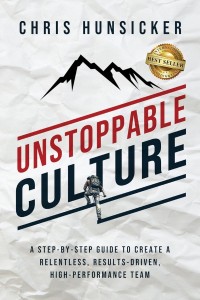
Unstoppable Culture: A Step-By-Step Guide to Create a Relentless, Results-Driven, High-Performance Team
There are four parenting styles that he mentioned in the book. They did a study. It was based on a parent who’s being warm and a parent who has standards. For instance, the authoritative parent or authoritarian parent has no warmth but has a ton of standards. The drill sergeant. That sounds like the path you may be going down. Are you going to get the kids who are really great workers and they’re really hard and they go to college and they do everything right?
Yeah, but I’ve spoken to a lot of people who had parents like that. The relationship is not the greatest. You get your kids to do what to do, that’s fine, but at the same time the connection is not there, the love is not there. The next one is the neglectful parent. Neglectful parent, really, they’re just neglecting, there’s no warmth and there’s no standards at all.
That child actually does better than the permissive parent. The permissive parent is the one that has a lot of warmth, a lot of love, but no standards. You see parents like that all day. That’s why these people are on TikTok crying and screaming because they were coddled their whole life. They had no standards. What you’re trying to tell your kids, “Let’s do this.” Let’s try to create some type of framework for our children to survive, not and to thrive, not to have our kids just completely coddled and if something happens, you’re going to take care of it and you’re going to fix it for them.
That’s what the permissive parent does and that’s probably the worst type of parenting for the outcome of the child. The authoritative parent blends warmth and love with creating some type of standard. You want to have a blend of both of those. You can’t just be authoritarian and push them, you need to guide them. It’s a work in progress because we’re all going to screw up our kids. Our parents screwed us up. That’s just the reality.
I think if you look at it from that perspective, you want to be the authoritative parent where you want to guide your kids, you want to teach your kids, but you also want to show warmth and you want to have their standards like you guys are doing. Go to the gym, eat healthy, make sure you do your homework, make sure you create some type of goals, make sure let’s talk about money.
These are all things that need to be done but they need to be done in in a loving way where you connect with them and you’re not just being dictatorial. As parents, we go by the default that we know what’s best for our kids and we’re always telling our kids what to do. At a certain point, we need to stop and we also need to listen to our kids. Did that answer your question?
It did. What route are you taking? Last point on this. If one of our kids wants to become an artist, and he’s really good at it, he’s got to get his college degree then he can become an artist.
You do anything you want, but put structure.
Is that the right thing to do because he could have become the greatest artist ever?
It’s not the right or wrong thing to do. I’ve been down the route. My first two kids went to college. I forced them to go to college. My third child, daughter, she didn’t want to go to college. She went to massage school. She loves massage. She literally gave massage to my neighbor next door who is a retired two-star general, gave it to his wife. The wife actually texted my wife and said, “She was incredible, the best massage I’ve ever had.”
That’s her genius. That’s what she loves to do. She wants to be a mom. She’s got no student debt. Her net worth is $320,000. She’s invested in four of my deals. She’s got X amount of money in the bank right now. She loves what she does. Ultimately, she wants to become a parent, she wants to become a mom. If I had been the parent that said, “You need to go to college for the next four years,” probably not the right path to do.
I think we have to hear them out and see what they want. That’s your fear transferring onto them that they need to go to college and get a four-year degree and then you might do the art thing. Art thing may work. It’s your fear of them may not. I feel your fear because I have the same fears as you do. I did it to my second child who’s a son. Your son’s got to be able to be the provider, they have to be the responsible one and I almost pushed him to go get a job in an office and I know he hates that.
I’m thankful that I didn’t do that and I gave him the ability to invest in deals with us. He’s doing really well with the deals with us but he’s also building a business alongside us. That’s what he really loves to do. He loves to problem solve, he loves to create. It’s very challenging and every child, unfortunately, August, is different. All kids are different and their temperaments are different. I think ultimately, as you’re teaching them about the financial independence and about how important money is, I think as parents a lot of us just focus on just get a good job, make good money, be secure.
Could you imagine if your kid goes to college and gets a job but at the same time is doing art and he could find a job where he loves or she loves and she’s creating great art and he has a healthy relationship with money and it’s okay for him to sell all his art or her art? Make money doing what they love to do. Isn’t that what we all want to do? We just want to find a job that we really love, we want to go to and we want to make a change, a difference in life. That’s what all of us ultimately want to do.
We want to be happy. We want to live in a state of happiness. That’s really the goal of life.
We’re on top of the hour here. Thank you so much. Let’s just bang through a few other of these quick questions. Before we get to the 10 Championship Rounds to Financial Freedom, last question. You’ve been involved in multifamily for a long time, help people do billions of dollars in deals, hundreds of millions of dollars of deals yourself.
If the real estate market, the real estate cycle was a clock, particularly multifamily cycle, and multifamily real estate is cyclical, it goes through these cycles, recession, recovery, expansion, hyper-supply continuously, it’s done that for last 150 years in the US at least. Now, if multifamily cycle was a clock, 12:00 is top of the market, mania, multiple offers, non-refundable deposits, 6:00 is bottom of the market, recession, people are walking away from their deposits, foreclosures, a GFC-esque type of timing. What time is it now?
2022 was 12:00. We can look back. You can never time the market. The only way when it hit a high is you look back and go, “That was the high,” from the national perspective. I think real estate’s probably down 20% from there. I personally think where interest rates are right now, it still needs to drop a little bit. The appetite’s there for really good deals, but what you’re seeing right now are a lot of older crappy deals that they’re trying to sell at lower cap rates.
That’s not working. The better deals, the built-to-rents, the 1990s assets, those are getting bid up a little bit higher because there’s more value in those deals. For me is it 6:00? No. I think it’s probably 2:00 for me. I’m just waiting some of these asset prices to drop. It’s frustrating. The pricing out there is crazy because these banks, I don’t understand how they’re financing some of these deals. It’s really frustrating. Rents are dropping right now. It’s like catching a falling knife especially in a lot of markets.
Expenses have really shot up over the last few years. For instance, in our market back in 2020, a two-bedroom was $900 a month and you’re doing substantially well on that $900 a month rent. Now rents are at $1,300 a month, $1,400 a month. They’ve elevated a lot but expenses have as well. When you’re underwriting deals right now, make sure you have a really good grasp on your budget. What’s the rental budget going to be when you take this property over and what are operating expenses? Today’s operating expenses. Get a grasp on that and I would say be very conservative with rent growth. I would say 2:00. I think that’s where we are right now.
Thank you for that. All right.
The 10 Questions
Okay, Gino, let’s do the second segment of our show, the 10 Championship Rounds to Financial Freedom. I have ten questions for you, whatever comes top of mind. Are you ready?
I’m ready.
Let’s do this. First question. Who’s been the most influential person in your life?
I would say my mom. She forged me, had been in business for her forever. Obviously, my wife would come to mind. If I’m going to say the person who really influenced me from childhood, I’d have to say my mom.
Love it. Amazing. Next question, Gino. What is the number one book you would recommend?
For the readers and for what I’ve been speaking about over the last hour or so, I would say go check out Stephen Covey’s books. His books are great. The 7 Habits of Highly Effective People is just a phenomenal framework to start living your life.
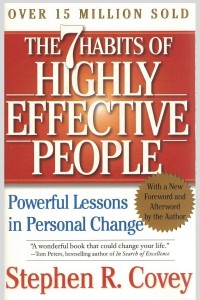
The 7 Habits of Highly Effective People: Powerful Lessons in Personal Change
Nice. Right on. Okay, next question. If you had the opportunity to travel back in time, what advice would you give your younger self?
Don’t focus on the money. Focus on the skills that you’re going to learn and those skills will ultimately translate into money and learn how to sell.
Right on. Okay, next question. What’s the best investment you’ve ever made?
We bought a seller finance deal back in 2011, 281 units for $11 million, fully seller financed. That deal now is probably worth $30 million. We still own it. We refi-ed it once and it’s how you build wealth slowly. You just buy these assets and you hold onto these assets.
Nice. Now, what’s the worst investment you’ve ever made and what lessons did you learn from it?
How much time you got for this one? I I’ll defer the Maserati Mike story. The one that really hurt me the most is I bought a property back in 2006 right after Maserati Mike and I bought this property. It was more like a rebound property. I wanted to prove it to myself that I knew how to do real estate. I bought the shiny object. I bought in the wrong part of the market cycle.
I bought a commercial building not knowing about leases. I didn’t know what due diligence was, I overpaid for the asset and it was ten years of literal pain. Every time the phone rang and I saw the property manager’s name on it, I wanted to shoot myself. That was just painful. The lesson from that is no deal is better than a bad deal.
Thanks for sharing that. All right, next question. How much would you need in the bank to retire today? What’s your number?
I don’t have a number. I’m retired right now so I’m pretty happy with what I have right now.
Right on. All right. If you could have dinner with someone dead or alive, who would it be?
This is funny. I’d love to have dinner with the holy family. I’d love to have with Joseph, Mary and Jesus. That would be a really cool conversation. I’d love to talk to Joseph and just to ask him how the heck did you do it? How did you have the strength and the grace to stay there and to raise Jesus? Pretty powerful. I’d love to do that.
Love that. All right, next question. If you weren’t doing what you’re doing today, what would you be doing now?
I don’t know. I own a farm. I’d probably be farming full-time. I’d probably be growing vegetables and dealing with livestock. That’s probably what I’d be doing full-time.
It’s very meditative. It’s so calming. I want my big garden. We’re going to start a garden here. My favorite question, Gino. Book smarts or street smarts?
I think nowadays, street smarts is probably better because AI is going to give you the book smarts.
Nice one. Last question. Gino, if you had $1 million in cash and you had to make one investment today, what would it be?
If there was no multifamily, I’d buy whole life, put it into whole life which is not an investment, it’s an asset, and then have that money there for my estate planning and then be able to pull that out, borrow it if I needed to go buy a real estate deal.
Right on. Love it. Awesome. This has been really incredible. Gino, just let everybody reading know the best way that they can reach you, please.
Just go to Barbaro360.com. If you want to reach out to me it’s Gino@JakeAndGino.com. That’s my email.
Thank you for coming.
Thanks, Gino. We appreciate you.
Thanks, guys.