

If there is one thing Ava Benesocky and August Biniaz would have done when they started with real estate investing, it is hiring and consulting with coaches. Emphasizing the importance of real estate coaching, they sit down with an actual coach: Zachary Beach of Smart Real Estate Coach®. He delves into the real value of quality real estate coaching in finding great deals, securing the right business connections, and protecting oneself from industry pitfalls. Zachary also explains how creative financing works, his work on single-family homes and rent-to-own agreements, and the beauty of focusing on people instead of just properties. Find out the role of real estate coaching in building your career from the ground up while being savvy in navigating the risks and embracing opportunities.
Get in touch with Zachary Beach:
Website: https://smartrealestatecoach.com
LinkedIn: https://www.linkedin.com/in/zacharyrbeach
Facebook: https://www.facebook.com/zachary.beach.7
Instagram: https://www.instagram.com/zacharybeachofficial
➤Newsletter: Join 10K+ investors reading the CPI Capital Newsletter each week:
https://cpicapital.cpicapital.ca/newsletter
➤Investors: Access CPI Capital exclusive investment opportunities:
https://cpicapital.cpicapital.ca/investor
➤Underwriting: Access to CPI Capital’s proprietary back of the envelope underwriting model:
https://share.hsforms.com/14uV3n5iJStO6Soy2RO6tmQ4rx4j
➤Website: https://cpicapital.com/ (https://cpicapital.ca/)
#avabenesocky #augustbiniaz #cpicapital
—
Watch the episode here
Listen to the podcast here
Important Links
- Zachary Beach on LinkedIn
- Smart Real Estate Coach
- BiggerPockets
- Realtor.com
- You Were Born Rich
- King of Capital
- Barbarians at the Gate
- 3PaydaysBooks.com/CPI
About Zachary Beach
 Zachary went from a bartender to a Real Estate Expert, Coach, and 3x bestselling Co-Author of Real Estate on Your Terms. The New Rules of Real Estate Investing, and Sell With Authority for Real Estate Investors.
He’s the CEO of Smart Real Estate Coach®, a partner in multiple 7-figure businesses, and co-host of the Smart Real Estate Coach® and Not Just A Transaction podcasts.
At the age of 25, Zach decided to leave the world of bartending and personal training and jump into the family business. It was one of the first big risks that he took in his life, as nothing was guaranteed. Plus, he knew absolutely nothing about real estate.
Through hard work, in-house training, and implementation, Zach has now completed and/or advised over 1000 deals and, on top of that, he leads and mentors students around the country on how to buy and sell property just like his family still does.
Zach has over 11 years of experience and now runs all operations of Smart Real Estate Coach®, on top continuing to coach his students and Associates. He has an amazing wife Kayla and two small children, his son Remi and his daughter Bellamy. He is a prime example of how to be successful both in business and at home
Zachary Beach On Creative Financing, Real Estate Coaching & Exposing Fake Gurus
Welcome back to the show.
Welcome back. We are here in our Vancouver studios. We are here recording. It looks a little different in the background there.
That is right. We have been back for about a week now. The Szechuan and the Chinese food, the dim sum, and Mama Mannisha’s homemade meals have just been amazing.
Most people might not know Vancouver has a huge influence on the immigrant population, a lot of them from Asia, from China, a lot of them from other places. The food is great because it is such a melting pot here in Vancouver. In the city that we live in, which is a suburb of Vancouver, a population of 200,000, it is 70% Chinese. We were talking to a friend of ours who is in California and actually a guest of the show.
There is a big Chinese population Asian population in California as well. We asked her originally from Vancouver, she moved to Los Angeles, we asked her, “What is a better food, Asian food in Vancouver or in Los Angeles?” She is like, “By far Vancouver.” Vancouver has one of the best food scenes outside of China. We are really enjoying the food. The weather has not been bad either. I am one of the number one critics of Vancouver weather because it rains 250 days a year. It has been great.
It is pretty much summertime. That is why we come back here, because Naples gets a little bit too hot, and we come back for food and family. We are here and excited to be here. We are excited about our show today as well.
We have a great guest for you. We are going to be talking about a lot of different topics about the market cycle. We are going to talk about real estate investing. A lot of times, people go into real estate investing alone, and they are crazy like Ava and me, who never got coaches. We had unsolicited coaches in some ways, and people somewhat mentored us, and we learned from, and we emulated. As far as actual networking or a mastermind type of program that a lot of them exist, our guest will touch on that. We did not join any of those. In retrospect, we definitely should have.
We always reflect back and say, “What would we have done differently?” Obviously, everybody knows we have built this company from the ground up with a lot of blood, sweat, and tears. One of those things that we always say to each other is that we should have probably invested in a coach. Not that we were know-it-alls or anything like that. Felt like we had real estate investing backgrounds and everything like that.
Over a decade each, and not just somewhat real estate on the side, building companies. You were a top-performing Remax agent. I was a home builder and had built probably close to a hundred million dollars’ worth of projects.
We’ve really been through it all. Even if you talk to the elite out there who have really cracked the code on success, they still have coaches. I am excited to dive into our guest. We have Zachary Beach on the call. He is part of a real estate platform called Smart Real Estate Coach. Welcome to the show, Zachary. Nice to have you here with us.
I am excited to be here with you guys. Now you guys got me super hungry. We already had lunch here in Massachusetts, but next time I want Asian cuisine, I am going to Vancouver.
How Zachary Found His Way To Real Estate
We will take you out somewhere nice. You know what, Zach, we do not do a bio anymore. We always love the guests. Just tell us about your background. Tell us a little bit about yourself, please.
I liked to tell people I was a poor kid growing up in a rich town. As you can imagine, that chip on my shoulder has always been there because I have been, quite frankly, trying to prove people wrong ever since. I do not know if anybody tuning in to this can attest to that, but it has been a driving force for me. The reason why I actually went to college was that my teacher said I could not. I went there with zero idea of what I wanted to do. I did what every single good college graduate does, he became a bartender. I started bartending in Newport, Rhode Island, for about four years.
I was getting extremely burnt out. I had that entrepreneur spirit. I was bartending late at night. I was personal training early mornings, and I was taking on some other business ventures, but I was just getting extremely burnt out. I saw that my father-in-law, Chris, who I know is originally supposed to be on the show here, Chris Prefontaine, was coming out of the 2008 crash and reinventing himself in real estate. He is using what we are going to talk about here today, known as creative financing.
I approached him, and I said, “I do not know if I am going to like real estate. Frankly, I have zero real estate experience, but I wanted to see if I could be good at it.” I actually approached him and started adding on some menial tasks like making phone calls, cold calling, things of that sort, and started from the ground up. About six months in, I finalized my first real estate transaction and burned the ships from there and went all in on real estate.
That has been roughly eleven years now, and I have built and scaled a real estate portfolio using creative financing and redoing it again right now using our exact techniques. Along the way, people started asking us what we were doing, and we accidentally started this real estate coaching program with Smart Real Estate Coach. Eventually, that grabbed a lot of our attention and started building that up alongside our real estate portfolio. Here we are.
Zach, that is great to hear. What does your real estate portfolio consist of? Is it more like a single family? Is it multifamily? Talk to us about that.
Now it is a bit 50/50. That is just because I have been very focused on seller financing, tired landlords, small multis, but what we grew as a family was that we always had roughly 75 to 80 single-family doors that we bought creatively. This is purely no money down or little money down deals. We would sell them on rent-to-own because roughly 70% of the United States cannot walk into a bank and get a loan. We actually captured that market and sold everything on rent-to-own. We built up that portfolio, and actually, we sold off almost all of it during COVID because all the single-family properties skyrocketed during that timeframe.
Taking a step back before getting into the mechanics of what it is that you guys do, your business model, and what you have. Did I hear you right? You said that Chris is your father-in-law?
That is right.
Walk to us. What did you go to school for?
I went to school for marketing and a minor in finance.
You came out of marketing and minor finance, and you were bartending full-time?
You got it. I started as a bar back. I did not go right to bartending. I started as a bar back, came out, and was bar backing while I was in college.
When did you meet your wife?
I met my wife when I was twelve years old.
You guys were serious.
We have been more on than off for 22 years at this point.
Did you get married after college? When do you guys actually get officially married?
2014.
Her father was doing this business, and what have you? Was he coaching by the time you got involved in his business? He was already coaching at that time, or was he just doing real estate investing?
He had been coaching creative financing for just around six months to a year at that point when I first got involved. He was a big coach for Tom Ferry in the real estate agent space for a long time, as well as they were doing a hundred homes as a broker-owner, and all of those fun activities as well, before we started this creative financing coaching program.
Got it. How long ago did you join full-time working with them?
Over eleven years now.
Is your wife involved in the business at all, too?
She was our office manager for quite some time when we both, because she was also a bartender too with me and we both transitioned eventually into the family business. It was me, my brother-in-law, my father-in-law, and my wife. We had a couple of support teams, and we went from doing a couple of deals a month. We were doing roughly ten creative financing deals per month when we were solely focused on the creative financing business. Eventually, the other coaching companies started to grow as well. We have been managing both ever since.
How much of your time is spent on the coaching side? How much time is spent on the investing side?
Nowadays, it is like 80/20. Being the CEO of Smart Real Estate Coach requires me to run the team leadership, get on planes, speak on stages, and do fun activities. Roughly twenty percent of it goes into buying real estate deals.
How many students do you guys have?
It is going to vary month to month when it comes to that. We usually have roughly 150 to 200 active what we call associates. The people that we actually deal with. We have a very different platform, and then we have hundreds of ones that are in the lower tier or lower ticket group coaching program.
Importance Of Real Estate Coaching
Fair enough. I am going to take as the start of the show, we discussed how in retrospect we definitely would have Ava and me going back to founding our company CPI, we would have gone the direction of coaching, not only solely because your coach, in most cases, has seen it all. You are getting experience from somebody who has experienced it all, but also from the fact that you can network and meet others, potential great partners.
Actually, one of our partners, our executive team members, came from a coaching program that he was part of, and his coach was on our show and told him, “You should check these guys out. There’s, see some alignments,” and he came on, and now he has been a partner for almost four years with us. It was the best partnership of my life, at least I am not sure about you, Ava. Maybe your first partnership is probably me, but I would say number two is Paul. Aside from that, I believe in coaching, but in recent years, we have had lots of trouble, a lot of headwinds.
A lot of turbulence in the real estate coaching business because anybody who has ever done a couple of deals puts the label of coach on themselves, and they go out there and sell a lot of courses. Actually, selling courses is part of what some of those unscrupulous people like Andrew Tates of the world. It is selling coaches to the young of the world, which becomes this whole plan of making them rich. That happened a lot, and obviously, it happened in the real estate world as well.
Aside from somebody not having the experience, which is eleven years, even if you were not the sharpest tool in the shed, you did something for eleven years, you have seen things along the way, you can definitely add value to somebody’s life by that time. Aside from not having the experience or knowledge to teach someone because you have not done enough coaching out there, there have also been coaches who have taught people ways to do deals, but they did not teach them everything.
For example, there was a guy on the Wall Street Journal who lost $200 million worth of deals, a very famous situation, and he lost tens of millions of dollars of LP equity because he was great at acquiring deals, raising money, but he was not great at executing the business plan. I heard a recent quote by Genghis Khan, brutal mass murderer of history, who invaded. He invaded the country of Iran and killed many people in Iran, where I am from. I have a big bone to pick with him, but he has a great quote where he says that “Conquering the world on horseback was not as hard as you actually think. It was getting off the horse and trying to rule the world is much harder.”
A similar idea in real estate. Buying real estate is pretty hard. It is like conquering the world, but still ruling it is much harder. That was the case with that and many other groups that bought deals, and they ended up losing a lot of money. There was also a situation where there were a lot of people who were actually knowledgeable people. Brandon Turner has recently been in the news with Bigger. He used to be one of the founding people of BiggerPockets. Recently, he came on and did a post a couple of days ago that he has lost $15 million of LP equity just on one deal alone.
That deal went sideways. There has been a lot of chatter online on X that blew up with messages criticizing him because of a couple of points they made. Number one, he did not understand fully. Actually self-admittedly said that he did not fully understand rate caps, which is an insurance policy you can buy at your rate when your interest rate hits a certain trigger point. This insurance policy type of thing kicks in.
There was also another element that he had put on high-octane debt on this deal. People were saying, “How could you do that to your people anyway?” You see the angle I am coming from. Another thing I want to touch on as well, on this coaching side. I am sure you hear things there. What is your response when it comes to the coaching platforms or coaching being used as a get-rich scheme for the coaches that exist out there? How are you guys different from that? Maybe you can share some success stories for people who are in your space. I want to hear that.
I appreciate the criticism when it comes to the coaching world because, unfortunately, we have been through many, many coaching programs or mentoring programs, whichever word you want to choose for that particular person or group, and did not necessarily get the results that we want. Yet we still join groups on a day-to-day basis or a year-to-year basis in order to actually educate ourselves and move ourselves forward. It is actually an extremely fragmented market right now, which causes quality control issues.
When we first started, there were probably 4 or 5 key real estate investment coaches out there when it came to promoting themselves. As social media blew up, it gave people a platform, good, bad, or indifferent, to be able to attract people to their lifestyles or whatever they were choosing to promote. Just because they showed they had a good lifestyle did not mean that they were a good real estate investor. That is a key component. Unfortunately, followers, people believe that if you have a large amount of followers, you know what the heck you are talking about, which is not necessarily true.
I want to take you guys a step further because we have actually been huge advocates for what you are talking about in this industry, especially real estate investing. Actually, right now doing real estate coaching services and a technology roll-up that are extremely focused on the elite educators. That way, we can condense this fragmented market to ensure that students actually get their results like real estate deals. One of our core values is to complete all transactions with the highest integrity. We believe that the only way that we can ensure that our students are not only learning what they are learning from us, but actually implementing the deals the right way, which is really important.

Real Estate Coaching: One of our core values is to complete all transactions with the highest integrity.
We can share on this show. We could have thousands of people come and say, “Zach, yes, we want to join your community. We want to do creative financing.” I can share with them all the knowledge in the world that I have. If they do not implement it in the right sequence and follow the exact checklist, they can actually put themselves in a bad position. A creative financing deal could have 50 different checkpoints that they need to hit. If they miss two or three of them, it could put themselves in the best position for that transaction. Further, just like any real estate transaction.
We will get into that part. I want you to talk about the high level on the coaching side. You touched on those points. We will get into what it is that you guys do, and we will have a conversation there. I just want to talk about coaching in general.
Further, if you would not mind, the important part is that we believe the only way that you can actually quality control the students is by implementing exactly what you are teaching them, if you have the right systems is if you actually do the deals with them. That is a huge component when it comes to us. We do not just coach, we help the implementation process because, yes, coaching is about sharing your knowledge, but actually getting somebody to do what you have in your knowledge or in your brain the right way, and to ensure that they actually execute deals the right way is extremely important.
That is why I was mentioning that we are taking a step further by actually implementing this coaching acquisition roll-up to ensure that we have the right elite educators to actually get deals done correctly and make sure they have the right systems and the right tools to ensure that we do not constantly have these things pop up in the news of people being or people not actually doing what they say they are going to do. That is affecting many lives.
If we can actually combat it the opposite way, and we can empower people, and that is what we consider being a coach, empowering individuals and families to create the life of their dreams. That is our outlook on coaching. We have to empower these people to do it the right way. When we no longer have oversight or no longer lock arms with them, they have the right systems, the right integrity to continue to do real estate deals and do it the right way.
How Creative Financing Works
That is as far as the coaching side goes. Let us discuss what it is that you guys actually teach. You teach creative financing. Define what that means.
Creative financing is just simple terms. We do not use banks. We do not put down large down payments, especially compared to the traditional market. We do not personally guarantee debt. Anything that is outside traditional bank financing is what we would consider creative financing. If you are 10 or 11 years into this, it used to be buying and selling on terms. If we break down the strategies right now, just give a high-level.
We have seller financing. Instead of going to a bank for a loan, the seller will actually be the financier of the property. Second is buying a property subject to the existing loan or keeping the existing debt that the seller already has in place. Now your contracts are obligated to continue to make the payments on their behalf. The third, again, acquisition strategy would be a lease purchase or a lease option, which is your ability to control the asset without actually owning it, and then be able to provide it to an end buyer as well. That is how we buy creatively when we look at creative financing deals.
Maybe you can talk to us about a journey that one of your associates takes. They see you on this podcast, and they connect with you. What does that look like? They joined the mastermind. What is the next step? Do you figure out what market they want to be in, or do you guys tell them what markets they should go in? How about the asset class, the business model? How does that all define? Does this student have to come into the platform with these ideas ahead of time, or is it something you guys are providing them?
We like to be hyper-focused. A majority of our community members, or students, or what we call our associates, are either 1 or 2 people. This is really what is going to determine that answer. They are either somebody who is an employed W-2 employee, or they are looking for time and financial freedom. They are obviously going to be limited by the amount of time and resources they have in order to start investing in real estate.
That is one. Second is the seasoned real estate investor who sees what’s happening in this current market, and their profit margins are being affected, like a wholesaler or a fix and flipper, you name it. Now they see creative financing as an option to be able to either capture more profits, adding what they are currently doing, or make a complete transition in their current business model to start capturing.
The former guy, who is a W-2 guy, do you tell him to go find out what you like, go either short-term rental, or small, multi, or other? Who makes that decision initially? The seasoned guy already knows what he is doing, so he is just coming to you for advice on how to be more creative. How about the W-2 guy?
We are hyper-focused. When anybody comes in, we are telling them to buy single-family properties on creative financing, seller financing, subject to lease purchases, and then exiting. This is what we are known for. Our 3 Payday system is exiting on rent-to-own and selling to that 60% to 80% of buyers out there that cannot walk into a bank loan. That is our process and our strategy of preparing all brand new people. We always like to tell them to buy within a 50-mile radius of where they currently live. That is important. The hardest part is getting to your first deal, and then eventually it is to grow and scale.
The hardest part in real estate is getting your first deal and eventually growing and scaling it. Share on XIt is because of a confidence thing. It is typically the issue. Most of it is in the six inches between our ears. I do not want someone to have to go learn a new market virtually across the country because Realtor.com says that that is a good market to buy in. Instead, I want them to be able to see, touch, and feel the properties they are going to buy, be able to interact with sellers, and have those conversations so they can build that confidence more quickly. We have them buy roughly within a 50-mile radius of where they live. That way, they can work the business that way.
Where do the leads come from? Do you help them to create a system to create those leads, or do you guys provide them with leads?
We have third-party platforms that we recommend and that we have used for over a decade now. You can actually find these leads for creative deals, especially single-family homes. They are everywhere. For sale by owners, expired listings, and pre-foreclosures. You can go grab niche lists from a PropStream or something along those lines. They are actually everywhere. The difference between somebody buying a creative deal versus needing to go get a bank loan is the questions that they ask and the motivation that they solve.
If somebody is offering a seller cash, it is usually going to be $0.60, unless they are a retail buyer, because they need to make their profit margins in the buy. With us, we can actually offer a deal at either a retail price or higher, so that they can actually profit from these deals. It is just done through the use of creative finance.
You talked about that. You also partner with your associates, so walk us through that. Somebody comes in. What was the market that you get the majority of your students from, or one market that a lot of students come in from? Is there one market that you feel maybe is your backyard in Massachusetts, or is there some market that you have a lot of students from, so I can use it as an exercise?
Of course, we attract a lot of people in the New England area because we have been doing deals in creative finance.
Let us just say that somebody comes from that market. They follow the systems you have taught them as a W-2 guy. He is making decent money. He wants more freedom. He wants to get involved in real estate. This is great, by the way, this is how people tune in to this, even though I am a critical one here, this is a great way to learn about real estate because it throws you in the grinder and you learn everything, and you have a coach there next to you. The worst thing that can happen is you learn lots about real estate, but decide not to do it anymore.
I do not know much about your guys’ platform, but this idea of learning how to do this, I definitely promote it to whoever wants to learn about real estate. Somebody in the Massachusetts area hears about you guys, a W-2 person, wants to have a different vision for life, and comes in to learn from you. He has followed what you have taught him about getting those leads. He has got a deal that he is buying from someone, and the plan is to. Do you guys also do any type of fix and flips by the same strategy, maybe buy something, or does it have to be, is there a flip component to it?
No, we do. That’s what I mean. We are always super hyper focused. We buy deals creatively, and we will sell them creatively. It is really important for us. Anytime we are teaching the student or the associate how to do a deal, these are all those little to no money down deals, creative financing. The major component when it comes to these deals is the conversation in that skillset around being able to share with the seller, “You have this motivation, I understand the finances, this is how I am going to be able to actually get you to the finish line here.” We go ahead, and we acquire it, and we walk them through the entire acquisition process and then the disposition process, which we sell on rent-to-own. Again, this is where we specialize.
The difference between somebody buying a creative deal versus getting a bank loan is the questions to ask and the motivations they solve. Share on XYou buy a house at a discount, you put a tenant in it, and it is yours.
That’s the strategy. Buy at a discount, sell to a rent-to-own, that is your bread and butter in this strategy. A guy in Massachusetts found the property, he is buying it for $0.70 for whatever reason it is, not putting any money in, and then he is going to put these tenants to own in there. How do you get involved? What do you guys put in?
I was just going to say, just when the tenant gets in there, how long until the tenant?
We will break down the tenant part in a moment, but just on a high level, the Massachusetts guy finds this property, buying it at a discount, he is making money on the buy, and now he is going to use your strategy to put the tenant to own in there. We will get into that in a moment. How are you partnering with them? What is your skin in the game?
By the way in which we communicate and coach these students and interact with them, that is what the skin is. We are not only doing it in person, but also virtually, where they are going to be having masterminds and weekly calls, but we also, our coaches are literally like their partners.
You are not signing on any loan. You are not giving them any money. It is just a partnership in spirit. They do not really put any, they do not have to put any money.
Here is the component. If we were doing a fix and flip and it was requiring a bunch of capital, then I would say everybody needs to do that. The way in which we structure our deals, there is typically no capital being handed over. If anything, our coaches are the ones who are using their skillset to get students in deals more quickly because they are the ones on the phone negotiating with sellers and getting them across the finish line.

Real Estate Coaching: Our coaches are using their skillset to get students in deals more quickly. They are on the phone negotiating with sellers and getting them across the finish line.
The cool thing about the way we set it up is that they are not bird dogging for us, and we are buying all the real estate deals, and we give them a kick of the profits. No, instead, they are the ones actively working their business. Every deal that they buy goes into their portfolio. We are just getting a more or less piece of the profits for helping close all of these transactions.
That is the front end. You go out there, get these leads, you teach them, hold their hands. They end up buying the place. This guy from Massachusetts bought the place. He got it at a discount. Now he has to put in a tenant who potentially wants to rent to own. Is the rent-to-own tenant in the earlier stages of bringing that tenant in? Has it already been qualified as a potential rent-to-own, or are you just rented out, hoping that the guy becomes a rent-to-own tenant?
No, we have an extremely specific process. I was literally on the call with a tenant buyer earlier for one of the properties we have, which we still actively do, and we walked him through the process. This is really important. This is the difference between success and not success. We can go out there and get properties under contract when it comes to creative financing deals. We can do it all day long. What is important is being able to fill the property with a buyer who needs time to qualify for a bank loan. It is not just a tenant. We have a very specific process where it is almost quasi-underwriting.
We got a property, we market it, and we have lots of people who call in. We had a property in southeastern Massachusetts that had almost 300 opt-ins that we had to talk to to walk them through this process, but we would not accept them unless they had at least have 3% to 10% of the price that we are selling it to them at. The buyers have to come up with a large non-refundable deposit both upfront, and we help them over time. We are also going to ensure that they can afford the property. They have to have roughly 33% or lower of their income from rent. That is also important. We want to ensure that if anything were to happen with the property.
You do not want it to be rent-burdened, basically.
We want the first person we place in the property to find success. I know you are speaking to other gurus and people out there. I know that some people literally stand on a platform and say, “Place people in properties, collect non-refundable deposits, who cares if they default?” Morally and ethically, that just does not work for us. I actually bought my first home on a rent-to-own, so I understand the process of just being a buyer because I was self-employed.
Finding The Sweet Spot In Size Property
Let us keep going here. What is the sweet spot? What size property? Massachusetts prices are pretty high. Harvard is in Massachusetts. Prices are expensive there. Somebody buying a house worth more than a million dollars in most cases, they can afford to buy it through conventional mortgage ways. They do not have to come rent-to-own, but what is the sweet spot? Is it a home? Is it a condo? What is the property that this model will work for in Massachusetts for that experience, that exercise we were doing?
National medium price range, medium price range, three bedrooms, at least one bath, of course, three-two is great, because you are thinking really in the suburbs or outside of cities. These are people who are either first-time home buyers or they had a legitimate hiccup in their credit in their rebuilding or their consolidation of families. You have the grandparents, and they are moving in with the kids who have their kid now, a consolidation of families. The medium price range is always the best because it is going to attract the most people.
What is the median home price in Massachusetts?
$400 some thousand right now. When you look at Massachusetts, you are comparing extremes. You have Boston, Massachusetts, to Springfield. Completely different scenarios here, which are in most states. You also had another really cool component, which is the higher-end luxury type properties, where you say, “If there is a million-dollar home and somebody can afford a million-dollar home, why wouldn’t they just go get traditional financing?” A lot of the people who buy those million-dollar homes are self-employed. Most of the time, they need seasoning because most self-employed business people are taught to show the least amount of income until they need to go get a bank loan.
What banks then need are they need 24 months of you showing that you make that money. Frankly, a lot of people who even have a significant amount of money do go through life events, divorce, things like that, where they might have a bunch of money on the side, but they are unable to or choose not to, even more importantly, go get another bank loan, at least for a period of time. We work with people in all sorts of fashion, but if we want the quickest to the deal, the shortest timeframe to be on market, a medium price range, because you have the most amount of people that are capable of buying that home.
I have a quick question.
Go ahead, because I am going to switch the conversation.
How Rent-To-Own Works
I just wanted to understand how the rent-to-own works. A tenant moves in there, how long are they typically in there before they buy the property off of you guys?
On average, it is roughly 18 to 24 months. Each buyer is different. We buy creatively and sell creatively. The creative process through selling on Rent to Own is that we find out the entire buyer’s package before we actually finalize the agreement. We use third parties that do background checks, credit checks, and we understand projected back-end debt-to-income ratios based on today’s mortgages, and we know their front-end debt-to-income ratio based upon rent right now, as well as how much money they have down. Once we have all of that together, a third party will say if they do A, B, and C, they will be mortgage-ready in 18 months. We will create a custom agreement around that. That is really important.
You would have to plan, like you said, for seller financing. For example, you said that your associates do not really have to come up with any upfront money. Don’t most sellers that do seller financing want some deposit, or do you plan it right so that the person that moves in has the rental agreement with you guys, you are then paying the seller some of that as well, as you are planning? It is time, but you have to time the seller part of it, buying it and then selling it as well. How do you guys do that?
My answer is going to depend. Every deal is different. How you buy it determines how you sell it. When we buy it on seller financing, and money is required, we could use contingencies in place that say, “I will buy it on seller financing on these terms contingent upon me having a third-party buyer ready,” and then we can then get the buyer’s money and give a portion to the seller. The other key component is that not every seller’s answer to their problem is money.
Not every seller’s answer to their problem is money. Share on XThere is actually a significant amount of sellers who will sell on seller financing with no money and zero percent interest rates because they are trying to spread out their capital gains. They do not want their money. They actually want it years from now, or they want to receive it in chunks over the course of years from now. I just say that because I understand that most people believe that you have to have money to get into real estate and have a seller do seller financing. Quite frankly, that is not the case.
I am actually working on a three-unit building right now in Springfield, Massachusetts. The seller no longer wants to be the manager of this property. He does want a higher purchase price, meaning he knows if he sells it for cash right now, he might get $20,000 less. We were able to negotiate it so we pay him that price in four years from now, and we only take over the existing debt on the property, and we only pay a seller financing at zero percent interest, no monthly payments, and a balloon in 48 months.
Every deal that we do, we have to focus on solving the problem. That is why I always tell people we are in a people business, we just happen to buy real estate. We have to focus on the individual seller and solve their problem. Once we have that in place, that will determine how we can sell it. Once we know that, then we go find the buyer, we go solve their problem, put that all together, and then we are able to profit from it because we are able to solve those two individual problems.
Is there a capital raising component in what you teach? Is there any situation where one of your students utilizing this model needs some money upfront, and they have to go out there and raise money, or in most cases, not really?
Ninety-five percent of our deals require no money, and we will go through with them, because we treat our students even further than if it were our own individual deal. I will go through every single aspect, or our coaches will, to ensure the student does not have to put money in the deal, or if they want to pass on it. There is a component as they get better. We raise some private money for deals where we get really good seller financing, ten-year deals, low interest rates, but they want 5% down, 10% down. We can go get private money or what we consider a capital partner.
Now we have some money to go buy that deal, and then we will manage that deal. It really depends on where that student is. Over the first year or two, those are not things that we are training on. It is important that we protect our students in a way, and we might do that to a higher degree than most because we want to ensure that they have the best chance of being successful in real estate. It is already a hard enough industry to be successful in the long term. We can get them to really key on wins. No money down, nice transactions, get money flowing, then they can start making other decisions.
How To Find Success In Real Estate Coaching
Let us follow up on that conversation about the journey of one of your associates because I think it is very interesting. There is a concept before getting into it that I want to touch on. I actually heard from Alex Hormozi. He annoys me. He is a weird guy. He has probably got some mental health problems, wearing that stuff on his nose and massively on steroids. Aside from that, he has got some great points. He is actually half Iranian, like where I am from. His dad is an Iranian doctor married to his mom.
They got divorced very early, so he might have some mental health issues because his parents got divorced young, like my parents did when I was somewhat young. Getting back to the point I was trying to make, he makes this really great point, which is a skill set compared to the industry. It is like you have, and in most of the people he talks to, it is like you have a ten skillset, but you are in two industries. That means you could be the most brilliant guy, but if you are in an industry where there is not a lot of upside or there is not a lot of growth, you are shooting yourself in the foot.
I would say the industry that we are in, Ava and I and our firm and our team, is the industry that I would say is a ten industry because it is private equity, there is really no ceiling. In that situation, if you do have a lower skillset, it allows you to bring in other partners or bring on employees or executives to help you with your skillset. It is a great way of looking at it. Let us take that idea and put it towards somebody who is your student, the guy we were talking about, who lives in Massachusetts, who comes in here, he has a W-2, his vision is to live a more abundant life and to have a secondary source of income, but possibly start a business so he does not have to, he can leave his W-2.
He comes on your platform, and he starts doing well. At some point, he does so well that the time that he has to put into this business is taking over from his W-2. He could even possibly quit his W-2. What is the next step? What is the progression? What is the evolution for somebody in this space? Where do they go next? At some point, they have to max out. What have you seen historically? Maybe they become a coach, but let us say they do not want to coach, they want to go the coach route, what can they do?
For example, if I make a comparison to short-term rentals, somebody who is really great at short-term rentals buys one, does really well, buys a few more, leaves their job, has a portfolio of short-term rentals, eventually starts a fund, goes out there, raises money, and buys a bunch of these short-term rentals. I have personally seen people do that, and I know somebody whom I actually advised to do the same thing. How about in your world? What is the path of progress in your world? Where are the clouds in your world, at the top?
When we look at the skillset in which we are teaching people, we just happen to be doing it in real estate, which is very relevant in almost every single industry when it comes to creative financing and comparing it to business acquisitions. I have a really good friend of mine, Allen, who teaches all that and creative financing, seller financing, those are all components when it comes to building businesses consistently as well.
When we look at the skillset that our students are learning, it could be elevated to almost every single industry that is out there, which is really cool. If we focus specifically on real estate investing, because there is significantly high upside, depending on the downside on every single deal, if you acquire a piece of real estate with no money and you make $75,000, then the deal is infinite returns. It is just now. How many times can we do that consistently?
We can now help them build a team in order to get there. The amount of deals that it takes to even get to a million dollars in creative financing deals is not that many. If we looked at a portfolio, if you are doing roughly 15 to 20 deals and at least a medium price range of like 300,000 to 500,000, and you are getting the types of returns that we are getting on our rent-to-own deals, that should be well over a million dollars that you will make just from that portfolio.
Now we take that skillset, and some will choose to, and again, it depends on the person, some will choose to now get into bigger assets. They learned how to buy seller financing on a single-family home, which is aimed at small businesses. Then now they go, say, “I was able to do that. I’m able to really put that together.” Now I can go to bigger assets.
Putting those skills you have learned to use for other industries, as you mentioned, and putting those skills to bigger assets, fair enough. Just focusing on the single-family side at some point. For example, within your platform, who is your poster child? Who is someone who has done this so great? How many deals are they doing? How much money are they making? I am sure you use that to showcase to your new people coming in, say, “Look at Joe over here. He is making a million dollars a year doing all this at home, and it has got his whole team there. This is our poster child for what we do.” Do you have somebody like that?
Yes, for sure. When we look at a gentleman named Rick, who is an engineer from New Hampshire, he had over a six-figure income when it came to his engineering job with 180 people that were reporting to him. He was able to retire in under twenty months from doing a deal or two a month. The thing is, when it comes to our creative deals, you do not have to build a massive team like wholesaling in order to actually eclipse your salary. That is a really cool dynamic of our business model. We do not have to have superstars to have people be successful.
Your bar is low, Zach, because your bar is somebody leaving their job. It is not a very high bar to beat. I was thinking about more upside on how this thing can get even larger, but let us continue the conversation. We got a good crash course on how everything works. Did you have a quick Ava?
No, you guys, yes, I got a great crash course, it was awesome.
Why Creative Financing Is At An All-Time High Now
You have a lot of students. You live, breed, and eat this space. Where are we at currently in the real estate market, the real estate market cycle? If 12:00 was top of the market, non-refundable deposits, absolute mania, lots of liquidity in the market, lots of deals, lots of acquisitions, and then 6:00 was absolute recession, people are walking away from their deposits, it is doom and gloom, what time is it today?
It is a feasting time right now when it comes to creative financing deals. Interest rates are high. They are not coming down. They have already tried to do it multiple times. You have homes that are at an all-time high of unaffordable. Now you have roughly when it comes to the Americans, specifically there, 75% of Americans have a 650 credit score or less. Both sides of our industry are primed, especially if we are hyper-focused on single-family properties right now, for students to get extremely good terms when it comes to these properties, because everything is pointing in the direction of creative financing right now. If it were not, then it would not be so popular.
We were doing this way before it was cool. The fact that you guys knew about it and already had an opinion on it means that there is some popularity around it, or it is out in the market. When we take the skillsets that we have had for this many years, have our teams had over 95 years of experience when it comes to creative deals, and we take it now in a market that is almost like shooting fish in a fish barrel, because if you just go on Zillow right now, you could go pull up any city and type in key terms, seller financing. That was not like that, and now you can go pull up 10, 15, 20 properties. I am not just talking.
Foreclosures too.
Especially distress listings too on top of it. If you just look at that and multifamilies, if you are looking at all these different things, not just single families, it is all pointing to the industry, or right now, the current market, whatever we used to call traditional, is not satisfying real estate investing. Now there has to be this thing called creative financing or creative terms, which is going to solve that problem. That is exactly where we are right now. Any person right now, I believe, and I am not a very smart person, any person out there at this point, if they just applied some skillsets when it came to learning how to talk to people and solving a problem, could get into real estate tomorrow.
When it comes to our creative deals, you do not have to build a massive deal to eclipse your salary. Share on XYou are saying that your industry is a litmus test for where the market is. Today is obviously in the bust cycle of the market. It is much closer to 6:00 is very close to say, would you say we’re before 6:00 or after 6:00?
When you say 6:00, what do you mean?
Imagine the real estate goes in cycles, it goes in recession, recovery, expansion, hyper supply, continuously going through these cycles. The top of the market is what I explained, where it is absolute mania, people are walking away, people are doing non-refundable deposits, the market is just on fire. 6:00 is when the market is really bad. It is the worst case ever, let us call 6:00 2008. Before ‘08, in ‘07, you could already see cracks in the system. After ‘08, by 2011, the market was picking back up. 2011 is around 7:00 or 8:00. 2006, 2007 is around five. 2008 was 6:00. Today, would you say we are before the bottom of the market or after the bottom of the market? Has the market bottomed out yet?
I do not think it has bottomed out yet, but I also do not know if it is the same. If you ask my business partner, you tell me it is not the same when it comes to 2008, where we are right now. We are in a major affordability issue, and we are unable to. It is 300% growth when it comes to properties over average salaries. It is just that people cannot afford homes anymore in areas that should be affordable. The challenge now is, what are the people who are actively trying to sell these properties going to do?
Now we have an overpopulation of, or oversaturated market of sellers trying to sell properties right now because they still think it is COVID and they still think it is COVID profit. What we are going to see, in my opinion, is that the price is going to drop because we are now seeing, on average, like sellers getting like 93-ish percent of their asking price. I think it is going to start correcting itself, and it is going to take some time to correct itself, because unrealistic expectations are really the problem that we are facing. It is a psychological problem.
Properties sit on the market for longer. The sellers have to choose the price.

In respect of time, let us get to the next segment of the show. Thank you so much, Zach. You were great. Seems like this is not your first rodeo. You have had other people’s hard-hitting questions at you. Let us get to the next segment of the show.
Ten Championship Rounds To Financial Freedom
Next section, ten championship rounds to financial freedom. We are going to ask you a series of questions. Are you ready?
Yes, I am ready. Cannot be any worse than what we just went through, right?
Exactly. This is fun. Do not worry. First question. Who has been the most influential person in your life?
From a business standpoint, I would say my father-in-law, Chris. He is the one who showed me how to be an entrepreneur.
Second question. What is the number one book you would recommend?
There are so many of them, but I will start with a classic. You Were Born Rich by Bob Proctor. He is the one who really got me into that growth mindset and being able to change my life.
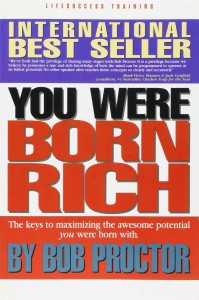
You Were Born Rich
We have not had that before, so great recommendation.
If you had the opportunity to travel back in time, what advice would you give your younger self?
Nothing. I would not give myself anything. I believe, and I know this might sound a little cliché, but I have always been asked this question. I would not be in the position that I am in today, and I would not be the person that I am today if I changed anything. Unfortunately, I went through a significant amount of challenges, especially growing up, which defines where I am today. I am now in a great spot to build for the next version of myself.
Yes, but just giving yourself quick advice when you were younger, it does not relieve you from all the pain and suffering and the difficulties and challenges you are going to go through. If there was one thing you could have told yourself when you were younger, what would that be? Like something, maybe, get into marketing instead of bartending. What would it have been like? Is there something you would have done differently?
Do not take yourself too seriously.
I love that. All right. The next question is, what’s the best investment you’ve ever made?
My first real estate deal. It was not the most profitable, but it gave me the most confidence.
You were talking about that earlier, right? What is the worst investment you have ever made, and what lessons did you learn from it?
Worst investment? Time investment in some group of people when I was growing up also caused some challenges. I probably would be in a completely different place. I am a big component now that I have kids, to put my kids in the right places with the right people. I would say just some of the people I was hanging out with growing up were my worst investment.
Brilliant answer.
I love that. Next question. Zach, how much would you need in the bank to retire today? What is your number?
It is my number to have me not work ever again, $100 million.
To have you not work, $100 million. That is a pretty common answer we get.
Did you hear him say $100 million?
Yes.
No, guessing I am supposed to be the hard-hitting question guy, not the psychic guy who reads people’s minds.
Next question. If you could have dinner with someone, dead or alive, who would it be?
Stephen Schwarzman. He is alive. BlackRock, love the story.
Blackstone. BlackRock was an offshoot of his company. Those guys used to work for Blackstone, but they went and started BlackRock back. They do business models that are a bit different.
Private equity intrigues me very much. Super excited about the next phase we are going through with our roll-ups and acquisitions.
There are a couple of great books on his memoir that came out recently, but there are a couple of great books, King of Capital and Barbarians at the Gate, which talks about the rise of Blackstone that talks about his early days, but they are great books on him.
Love that. Barbarians at the Gate, really good book.
Next question. If you were not doing what you are doing today, what would you be doing now?
What I would be doing right now, as far as transition, I would be buying businesses using my creative financing strategies, not real estate.
How about when you were younger? Did you ever want to plan to get into sports or something else you dreamed of?
Sports agent, something you thought about doing.
Next question. My favorite question. Book smarts or street smarts?
Street smarts. I had to start reading books until I was like 25. Street smarts all the way.
Last question. If you had a million dollars in cash and you had to make one investment today, what would it be?
Probably go buy a business.
There you go. Awesome, Zach. Just let everybody know who is tuning in, and what is the best way that they can reach you?
If you guys go, I would love to share with you our blueprint for our creative financing. Go to 3PaydaysBooks.com/CPI, which breaks down everything that we talked about here and goes a little bit further into it. If you think creative financing is the way you want to go, that would be a good start.
Thanks so much, Zach. Thanks for being on the show.