

Get ready for a discussion full of success strategies in real estate. Ava Benesocky and August Biniaz sit down with Michael Mannino Sr., Founder of Ark Investment Ventures, who shares his most effective tactics as a licensed Master Builder in both Michigan and Florida. He breaks down his journey from high-end custom homes and flipping houses to scalable multifamily investments, exploring how to manage remote construction across multiple states. Michael also reveals his revolutionary strategy for an affordable workforce in South Carolina and his approach to creating a highly accountable real estate team. Do not miss Michael’s insights on turning passion into profit, which ultimately leads to financial freedom.
Get in touch with Michael Mannino Sr.:
- LinkedIn: https://www.linkedin.com/in/michaelmanninosr/
- Website: https://aiventuresllc.com/
If you are interested in learning more about passively investing in multifamily and Build-to-Rent properties, click here to schedule a call with the CPI Capital Team or contact us at info@cpicapital.ca. If you like to Co-Syndicate and close on larger deals as a General Partner, click here. You can read more about CPI Capital at https://www.cpicapital.ca.
#avabenesocky #augustbiniaz #cpicapital
—
Watch the episode here
Listen to the podcast here
Important Links
- Michael Mannino Sr. on LinkedIn
- Michael Mannino Sr. on Facebook
- The Energy Bus
- Extreme Ownership
- The Go-Giver
- Ark Investment Ventures
- Mike@AIVenturesllc.com
- Driven: Unscripted Success on Apple Podcast
About Michael Mannino Sr.
 Mike Sr. is a licensed Master Builder in both Michigan and Florida. With over 35+ years of experience in the construction industry, he has built, renovated, and remodeled residential properties, including multi-million dollar homes for local celebrities — among them Manoj Bhargava, founder of 5-hour Energy.
As the CEO & Founder of Ark Investment Ventures and the founder of several multi-million dollar companies, Mike has successfully built, flipped, and invested in real estate, with a strong focus on multifamily properties.
From Real Estate Builder To Investor: Michael Mannino Sr.’s Success Strategies
Welcome back to the show, everyone.
We have a great show for you. Excited about it. Our guest has some similarities with what he does with my background. Similarities, maybe the hairstyle. He is a home builder in multiple states, and we are going to get into what that encompasses, but his home building is something that I think every man should learn how to build a home. The world would have a lot fewer problems if, being a man, you had to learn how to build a home.
If anybody does not know this, that is how August really got me. When I first met him, he had just built a beautiful luxury home, and he had just moved in two weeks prior. A couple of weeks prior, he said, “Welcome home, baby.’ I felt like a princess. You make a really good point there.
That is a great thing about being a home builder. You build a house, you want to sell it, the market slows down, and you just move into it. Next thing you know, you’ve got a girl.
You have a princess.
That is what we are going to talk about. Our guest is really incredible. He is very diverse. We are going to talk about that as well, but let us get into it. Michael Mannino. Thanks for joining us. Mannino? Is that how you say it?
Good. You got it right. Perfect.
Is that Italian?
Yes. Sicilian.
There you go. You are a home builder. I guess the apple did not fall far from the tree in that case, as far as Italians being in construction and what-have-you.
We started the Renaissance period.
Looking Back To Michael’s Career Background
Michael, why don’t we just start off by you telling us about your background and really how you got started in all of it?
I guess it’s a great question. I got fired from Red Lobster, and a friend of mine said, “Try the trades.” I went to work for a guy who was more illiterate than me. He is Italian and could barely speak English. In two years, I wanted to quit and do nicer stuff. I did finish carpentry. I wanted to quit him. He offered me a percentage of the business to stay. I still quit, and I went with the high-end houses.
I went from a 1,200 square foot condo to a 6,000 square foot ranch. I loved it. I started my own finished carpentry company, my own building company, and it turned into a flipping company. Now we are in a multi-family too. I have been doing this for 35 years. Thank you for saying I look young. Appreciate that. I have been a martial artist for 20 to 25 years, and I have won eleven first-place trophies at the US Open, two ISK belts, and one world record. I built a house in six days and flew a fighter jet. Besides that, I did nothing.
Fighter jet, where was that? You mean like Russia?
Florida. You know how you can manifest things?
Yes. I know.
You can just speak, and it just comes into existence. One of my flipping coaches was a pilot. I said, “I want to fly a fighter jet.” He goes, “You can do that.” I go, “Where?” He goes, “I do not know.” He was still in the Marine Corps at the time. I was looking for things to do in Florida and said, “Fly a fighter jet.” Long story short, I hopped in an L39 Albatross in Tampa, Florida, and flew around for a little bit. It was a total riot.
What an experience. Quickly getting back to Michael’s background a bit here. He talks about being a finishing carpenter. First of all, if anybody says finishing carpenter, they know their stuff. Usually, people say, “I do interior moldings, or I work with wood or woodworking.” They do not say what it is supposed to be, but finishing carpenter is the correct way. Just to describe that for people to visualize.
In a home, you have lots of moldings, and this could be paint grade or stain grade. The person who comes in and hangs all your doors, you see the casing, the header, the sill, and the baseboard. Michael, as the finishing carpenter, does that. Their job gets very detailed as well. They are the surgeons of anything wood-related in the house, and the framers are the butchers. The framer comes in, just snaps things up, and goes.
They come from the same foundation, both of them, but the finishing carpenter really does magic, especially when it is custom. If you know finishing carpentry, you know everything about building a home. Tell us a bit more before getting into other things. When did you get into the actual building? Being a finishing carpenter is a trade, but building a home, and now I talk about spec home or custom home. That is something else. Talk to us about that journey.
I was a finished carpenter, and I was blessed. The guy on my first day I got there said, “What do you think of the job?” I said, “I love it.” He goes, “I will pay you a whole $4 an hour.” We got really good at it. I started my own company. We started doing secret rooms. I know a lot of houses in the Detroit metro area. We won an award in several magazines for our woodworking. I just enjoyed doing it. I built a house for myself, probably just like you did.
I built another house, built another house, started building them for customers. I just enjoy it. What we love doing is creating. When I got into flipping houses, it was just faster. The framing was up, the electrical was mostly done, and the heating and cooling are in there. You just alter some things and change your roof, change the side, and do the windows, do the cabinets. You almost have a new house again. It is better, faster, and easier. We transitioned into multi-family like you guys. I absolutely love it.
Before that, I do not want to get into this yet. Sorry, babe, I’m taking all your questions away from you. This is more on the psyche of it. It is a struggle. One is that you come from that Italian culture that pulls up your sleeves and gets the job done yourself.
You enjoy it.
Hold on a second, that could also slow you down because if you are pulling your sleeves up and doing it yourself, it slows down scale and scalability because you want to get things done the way you want to do it. It is not who, not how. It slows things down a bit, not being a pragmatist, but being a perfectionist. For me, when I did not want to be a home builder anymore, it was as if I had broken my mom’s heart. She could not believe it. I did not want to do that anymore.
I am like, “No, I am going into this private equity stuff, raising money. Everybody else does all the work. I am just the brain power behind everything.” It did not make sense for her. She wanted to see me actually physically working. Even when I was building a house, I was like, “Listen, the right developer is never really even at the site.” He sends the site super, the site super is at the site.
The project manager is doing the project management back at the office with all the software. The developer is just the brain behind it all. She felt that being on site, dealing with trades, and coming home dusty was being a builder. Is that something you struggled with? If you did, how did you overcome it?
I loved it. I was good at it. If you love something, you will end up being good at it. I was really good at it. I mean, really good at it. People come up to me and say, “Can you do this?” I said, “Is it wood?” He goes, “Yes.” I go, “Yes. I have not even told you what I am going to do yet. It does not matter.” Secret rooms were my big thing.
It is very mechanical.
Sorry, secret rooms?
There is a restaurant we go to where one section of the restaurant, there is one here too, but this is a simple one. In Vancouver, the section of the restaurant, their private room, is behind a bookcase. A huge bookcase, I am talking about 20 feet high bookcase. That bookcase, you just press it. Now, this is not really a secret room. It is just a moving wall. A secret room actually blends into the background. Michael can explain it more.
I did a lot of them. My favorite one was very difficult to do. I cannot secure anything to the floor because we put in heated floors. You have pipes, so you cannot nail or screw anything to the floor. There is a room, I put a bookcase in front of it, and I had to have the middle section open up because the two sides could not. I set a section that would push over and then slide behind the one behind it. When you pull it back out and shut it, it would lock, and you cannot even tell. It is just like what we do.

Success Strategies: Building secret rooms involves a lot of problem-solving.
It is problem-solving. How are we going to do this? I have never seen the system that I designed to make that do that. You just figure it out. I love doing it. Actually, I am starting to build some houses over here so I can play with them a little bit. Not because I have to, or to help anybody else out, but because I enjoy doing it. I just put up some beams in my house, and everybody loves these beams, and it took me like a day, but I just love doing it. I am not going to take away from what makes real money and creates passive income for us for the rest of our lives, but I do enjoy doing it. It was a struggle. I still do it in moderation.
You can totally still do side projects to do what you love, but then also scale.
I can see it cooking. Believe me, I am going to drive by a lot after this call. I am going to pick up my kids from school, and we are going to drive by a lot. I cannot get the builder out of me.
No, he has such a good eye for it.
How To Become A Licensed Builder Depending On The State
Michael, you talk about being licensed in Michigan, Florida, and South Carolina. Give our audience, I know as a builder in Vancouver, when I was there for ten years, what it entailed to be a licensed builder. I was licensed through. There was no actual course. The way you get licensed in British Columbia, in our state, as per se in our province, is that you have to have a certain number of years of experience, and then you have to get insurance through a third-party insurance provider to be bonded.
You have to be bonded basically, and then you get insurance through the provincial governmental office, which is just getting a $50 or $100 license. It was not that difficult to become licensed, but here in Florida, I know the process is much more difficult. There are exams, tests, and continuing education you have to do as well. Here is much more difficult. Talk to us about what you mean by that. In Vancouver, you can do any job you want without a license, without pulling permits, all that stuff.
In Florida, there is a criminal element to it. If you do jobs without a license, you actually can be criminally charged. Give us a crash course on all of that.
Each state is different. Let us talk about Florida. My Michigan builder’s license for 30-something years. I got it in 1998. In Florida, they had reciprocity with Michigan. They said, “Here is the process. You have to apply, you have to get licensed and bonded, you have to do this, you have to take wind mitigation tests, you have to do this, and you have to go in front of the board, the building board, and speak with them. Let us see if you are articulate, and see what you have been doing.
Have you had any complaints with my license in 30 years in Michigan? Have you ever lost your license? That is just a transfer of license, not getting a new one. The process took months. I hired a company to help me do it. They called me up, and they said, “Did you hand in your information?” I said, “Yes.” They said, “I have never had this before, but you have to fill out this piece of paper.” I go, “What is that?” “I think you got your license.”
I was like, “I did not go in front of the board.” They saw my board. They saw my license in 1998, and they saw no criminal charges, no problems, no loss of license, no suspension, nothing. They said, “We want this kind of guy here.” I did not have to go. I was not excited to go talk to the board. They said, “No, you just got your license.” Now I am in South Carolina. I am taking the schooling and the testing. It takes about three to six months to go through the schooling.
You go take the license, and the license is 120 questions. You have three hours to do it. If you fail, we will see you later. You have to take it and do it again. You keep doing it until you pass. You have got your business law. You are going to do this in any state. Business law means you have to understand what a contract is and what the four elements of a contract are. When you sign a contract, what are you liable for? In Florida, if you do not have a license, you cannot build a house, but you can pull permits.
If you make an agreement and sign a contract, everything you are supposed to do for business law, if you do not have a license, you do not have to pay them. You can try to sue them, and you will not get it. If you do the kitchen for $30,000 and you do not have a license, you do not have to pay you. If you try to sue them, you can go to jail because you are doing the job without a license. It is no joke in America. It really is no joke. They do not want hacks going into this business. They really do not.
You were licensed in Michigan for a long time. You saw opportunities in Florida. You came here, and you got licensed. They literally wrap it in a bow and give it to you. Talk to us about what builders have aside from the experience and the tools that you use on the software coming out these days. Some of the updated material is coming in as well. There is a company called Boxabl that sends you a home in the size of a shipping container, and then they pull the pieces together, and it becomes a home.
Entering A New Market While Finding The Right Trade
That is going to progress, keep going, and make building homes much easier. Another important component of a builder is the trades and suppliers they have. Suppliers, we can leave on the side, not that big of a deal, but tradesmen, trades. I had a tradesman, Italian background as well, a younger guy, who was smart enough to do anything in the world, but he loved what he was doing. His job was to make wooden stairs. He would do stairs. A lot of times, I do my flooring.
I put oak floors on the floor, and I would take a piece of the oak floor. I give it to him. He takes that, and he basically does the same species of wood on my stairs and on my handles and everything else on my landing. He would send that piece to a painter, and the painter would color-match that exact color of the stain. He would get the same color. The house really matched. As a builder, you want that consistency around the house.
We had one of these handrails that was going up, and it had this little curve in it. We had it sitting in the garage because he was not ready to install it yet, and somehow it broke. One of the trades put some weight on it and broke right where the curve was, and this thing looked awful like it was completely garbage. He came to the site and said, “Somebody broke this, but I will figure it out.” He fixed that.
He fixed that to a point that me with my builder eye, could tell you about all the deficiencies that exist here. I could not see any issues there. This guy was a master craftsman at what he does. It was not easy to find him. It is not only going out there and finding the most expensive guy, because you cannot afford them. You have to have that balance. You cannot hire the cheapest guy.
You cannot hire the most expensive guy. You have to find the right guy. These guys get busy as well. How do you enter a Florida market and find the right trades? I have done this. I have come to a new city, for example, Florida, and I want to get my own trades going. I go look around to see who is a builder who is building a lot of homes. I go by there a lot, and I see the drywaller.
I go get his card from him. I see the painter. I go get his card from him. I steal trades from the builders who have been doing it for a long time. That does not mean I get the same service as that builder because the builder has given them so many jobs over the years. He takes care of that builder more than they are going to take care of me. How do you enter a new market and get your trade list going, the right trade for yourself?
That is a great question that a lot of people ask. A lot of what you have said, you have to find the right guys, the right spots. We did those radius suspended staircases where there is nothing underneath it, touches the ground, and then it attaches to where the landing is. There is nothing else touching the ground. It is called the radius suspended staircase. Not everybody can do that.
Nobody in Florida can. There is no woodworking in Florida. It is all cement tile. Very little trim, the casing, base, and a cabinet. That is about it. Everything is really modern. You have to go to the areas that equal the houses you’re looking for. You said you went to a job site. If we are doing a 4,000 to 6,000 square foot house, I would not go to a full subdivision and find a contractor.
You go to the nicer areas. Here are a couple of good tricks. You find one good guy. Let us say you find a finished carpenter and he is fair price. Who is your painter? Who is your drywall guy? Who is your framer? What we would do is follow each other. We did these starter mansions in Michigan. He actually did Five-Hour Energy.
Indian guy.
Real nice guy. My name is Manoj. And his wife, Sadhana.
He is a billionaire. Five-hour energy drink.
Just the greatest couple I have ever met. I love the people, Manoj and Sadhana, and we are inside their house, and we are talking to them. This is really good if you work here. I was in my finished carpentry company, and I just put my guys in there, and then they stayed there for a year and just did all this crazy woodworking, elevators, staircases. Billionaires are the nicest people.
You can be a jerk and be a millionaire. You cannot be a jerk and be a billionaire. I said to him one time, “Manoj, you have done something here. You have done something.” I am sure you had to make some enemies along the way, right? I am talking to a billionaire, and he goes, “No, not really. When you are doing it right, you do not have any problems.” He goes, “I tend to have one enemy.”
He points to his wife, and his wife sees it, and she goes, “That’s my line.” They were a great couple. They still are a great couple, and they give away 95%. I said to him, “Do you give away 95% of your income here?” He goes, “No.” He looks at his wife, and he goes, “We give away 99% of our income to charitable donations.” We are in a 12,000-square-foot house. He has a jet. He goes, “I do not know how we do it.”
Working On Multifamily Deals
Let us continue our conversation. Thank you for sharing that great story. I love those stories. It is a business. We have to make money. We talked about the artisan part of it, but there must have been a reason for you to be a master builder in Michigan and have been there for so long, and people sought you out. Those builders are hard because they are booked up.
You want to have a house built? “Sorry, he is just booked up.” I know how sought after some of these builders get. I was not in that situation ever because I was just younger and starting out, but some of these master builders are definitely sought after. There is also a component of workforce housing, a starter house that exists as well, aside from building custom or luxury spec. Is that a space you have ever been involved with?
That is where it leads me to the multifamily. For our multifamily deals, we use properties, we fix them up, make them a little bit nicer, and then they are affordable. We’re invested in one outside of Charleston, South Carolina. This is really cool. You understand the underwriting of the deal, right? What is one of your main expenses? Give me your top three expenses.
The biggest one is debt. Taking debt out of it, taxes are a big one. Employees are a big one. You have other main expenses, such as utilities.
Property managers.
The manager would probably be huge.
We have got this 168-unit property we bought last year. We saw that the play was not to raise the rents. The rents were in this sweet little spot between 1,300 and 1,700 for two bedrooms and three bedrooms. In that area, if you keep them at that rent, we actually lowered the rents. We bought a property. We lowered the three bedrooms by $10.
In South Carolina, if you partner with a nonprofit and you keep your rents in that certain range, you do not have to pay taxes. We just found out we got the okay this year not to pay $400,000 on taxes on the property. We partner with a nonprofit and give them 20% of that. We saved $320,000. That nonprofit gets $80,000. In the state, it is workforce housing. The state wins, the nonprofit wins. They make $80,000 a year just for being there.
It is important to note that this is not Section eight. This is more of an affordable rent play, not Section eight.
Not Section 8, not low income. They are paying for it. You are still making the payment. You are still paying for it, but it is people who fit in this certain mid-range who will say, “I am a renter.” They have the mid-range, and then you have the lower with the Section 8. Section 8 is paid for. You still have to pay this. The class A assets they do themselves.
Did you syndicate that deal, or did you put the money in yourself?
I partnered with a good partner. All our investors are getting, let’s say, you put $100,000 in. Between years one and three, you get 50% of your money back. After year two, they start taking out the preferred returns. At the end, you get the payout for that initial $100,000 that you got a year and a half before you got 50% of it back.
You are only into it for 50%, but you are getting the payout for 100%. Usually, anywhere from 12% to 18% is what we try to shoot for. I partnered with somebody on that because they had the idea, and I have to give the gold to the people who earned it. He found this deal. It is an amazing deal. All our investors win just like you guys. There are certain kinds of wins. Everybody goes, “What is your deal?” Each deal is different.
Finding The Right People and Creating The Right Team
Tell me something, this is something I have struggled with as well, within the deals that we acquire. We have a property manager. We have our in-house asset management team that oversees the property managers. Contractors are coming in and doing the work. I have gone to a lot of these apartments all over.
I have gone to different states, and the quality of workmanship in these apartments, like the way that paint is put on, and the way that finishings are done. It is not to the quality of me and you, but that is the industry. When I complained about it, or I talked about it, that is just the way it is. How do you control yourself from being involved in that side of things? How do you let go and just let the asset manager, the property manager, and contractors do their job?
You have to go with sunglasses on so you do not see everything. Blinders, like a horse.
Everything sticks out to you guys. It does not stick out to the eye of the limited partners.
It is painful for us because we know how to do it right. When I am in control of the property, there are other partners that other GPs and they have in the property than I do, but when I’m in control of it, I have a simple conversation with the asset managers. It’s usually construction guys. Meaning you can get along with them. I’m going to say like this, coaching. You coach them to do it right. Does that make sense? We were doing a small 11-unit in Michigan.
I told them, “We are going to flip this unit in a week, and you are going to flip the next one in a week.” Only five days. Cabinets, countertops, flooring, doors, casing, base, tubs, faucets, showers, everything. We took everything out of the property. They said, “No, we cannot do it.” I said, “What do you think the odds are of doing it?” He goes, “The low guy on the totem pole, 60% will get it done in five days.” I go, “What do you think?” He goes, “70%.”
The guy running the play, the contractor, I go, “What do you think?” He goes, “90% odds of doing this.” I go, “Bet me 100%, let us go. Here is what we are going to do.” The week before, we had all the material. We have a nice system and process where we have a standardized pricing sheet, and you can use this for any property. The flooring is laid out on Home Depot online, where they have the SKU for it. We have the paint, casing, doors, cabinets, flooring, tubs, sinks, and faucets. We lay that out.
We agreed to it. The contractor agreed to it. Our system culminates it and makes a list for Home Depot. You put 750 feet of flooring, one sink, one faucet, one toilet, ten cabinets, countertops, paint, casing, base, all this, collapse it, goes to Home Depot, and then they order and bring it out to your job site. All the materials are there. The guys do not have to run every five minutes to get something. I said, “We hand it to him. What are you going to do on day one?”
He goes, “I am going to do the cabinets.” “What are you going to do?” “I am going to tear everything out.” “What are you going to do?” “I am going to tear out the bathroom.” “What are you going to do on day two?” He goes, “We are going to do this and that.” “What are you going to do on day three?” “We are going to do this.”
“What about day four? What are we going to do on day five?” They just stared at me. What I did was I made them take ownership of how long it was going to take them to do it. You are going to do this in four hours. You are going to do this in five hours. Last day, there was nothing to do. I said, “Do you know what we are going to do on the last day?” Whatever we did not get done in the last four days.
Help your team take ownership of doing the jobs assigned to them. Share on XYou did not mind that this might work for that 11 unit where you are very much hands-on. On a 200-unit, when you have other partners, other general partners, you have the contractors, you have the property manager, you might be stepping on other people’s feet if you are coming in there as experienced as you are. How do you control that?
There is always one person in charge of each thing. If you have more education and more experience than I, I will take a step back. That does not happen. How do you do it on a 240-unit? You do not want 240 units to be empty. We kicked everybody out of the 11-unit. We just said, “Everybody get out.” It was during COVID. We were having problems.
Whatever ones we had open, we just started doing them. Within six months, we had all of them done. On a 240-unit, which ones are open? How many can you get to? Can I get to 30 in three months? That is the month. Instead of one guy who can only do four units a month, now you need two guys for eight. Now you need a third guy. I need three contractors who agree to the same thing. You guys get these three.
Building In Michigan And Florida While Residing In South Carolina
You just have to manage it. That leads me to my next question. Where do you reside, Michael?
South Carolina.
You’re in South Carolina. Talk to me about how you manage building in Michigan and Florida, but residing in South Carolina. How did you build out your systems and processes to do all that?
I know why you married her. She is smart. The secret is getting systems and processes and getting the right people involved. There is a book called The Energy Bus. Energy goes in one direction. The leader determines who is in the bus and which way the bus is going. Sometimes you have to adjust people in the seats. Sometimes you have to adjust people on the bus and off the bus.
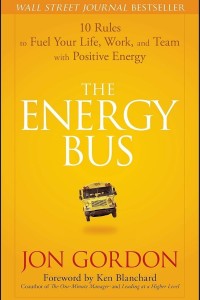
The Energy Bus: 10 Rules to Fuel Your Life, Work, and Team with Positive Energy
You get the right people, and if they’re not the right people, switch them out. I met Jocko Willink, who wrote that book, Extreme Ownership. I got to meet him. I was actually going to fight him one time. It was not a great idea. He would have killed me. It is a sparring match. He would have killed me in three minutes. In sparring, he is in jiu-jitsu, and I am in judo.
We would have done that. He said, “Extreme ownership. If you take ownership of everything, here is the beauty of taking ownership of everything. When I take ownership of a project, it is 100% my fault, no matter what happens. I was not there to check it to make sure it was going right, or I did not hire the right guy. If you try to put the blame on somebody else, then you cannot fix it.”
It ends with you. August and I have this conversation all the time. Who is this ending with? It is ride or die on them.
It does not matter who initiated it. If there is a project and it ends with you, it ends with you. You cannot complain that, “I asked you a question about this.”
“I told you to do this. This had to be done the other day. You did not follow up. You did not make sure it was done.” It just ends with that.
If I have assigned the project to Ava, or if there is a project Ava is working on and there is an item she is waiting on me for that project, the dependency is still on her for not completing it because she had to be on me to make sure I provided that to her.
What you’re talking about, we learned this early on. Extreme ownership. We learned this early on in our business.
It is very militant.
That is how shit gets done, and that is how things stay organized.
Do you want me to tell you a quick story that Jocko told me?
Sure.
It is in his book. Jocko was a Navy SEAL operator in Ramadi in 2006. The most dangerous place on the planet. People were dying daily. He was in charge of the Navy SEALs for that area. Right now, there is the Marine Corps, the Navy, the Army, and other special forces. One time, one of his guys called up and said, “We are in a firefight for our life and we need help.” With Navy SEALs, they drop everything, and he starts running. He gets on the phone and goes, “What other assets are there? What’s going on?”
He gets there, and he sees the Marine Corps firing at his guys. We call that in the military service, blue on blue. Blue versus red is two teams. The same team that is fighting each other. This guy is like, “We’re stuck in here.” He sticks his head in there and goes, “Come on, guys, get out.” He goes, “What are you doing with all those people that are firing at us?” They walk out and see that it is our team. He goes back, and he has to have a debriefing. His boss is at the debriefing.
He goes, “Whose fault is it?” The communicator goes, “It was my fault. I did not check.” The Marine Corps goes, “It was our fault. We saw guys firing and shooting at them. They fired back.” You know what Jocko did in front of everybody? He goes, “Do you know whose fault this was? It is my fault. I am in charge of you guys. I should know about the other guys. This is 100% my fault.
The buck stops here. I guarantee you one thing. This will not happen again until I leave.” He took extreme ownership of that situation. He could have been fired. Thank God nobody died, but people die when he makes wrong decisions. A blue on blue is probably the worst thing you could possibly do in the military. He took extreme ownership of it. His boss said, “That is why you’re in charge.” He walked out. If you take control of it, you can change the outcome.
You can get it done in six days. You have to have other people take ownership of what they said. When I asked these guys how long it was going to take to do this job, a couple of them had to stay a couple of extra hours on Tuesday and Thursday because they thought they could get it done. They could not get it done, but they did it. Once they take ownership of their responsibility, they are not on an hourly job anymore. That is my project. That is how you get people to get stuff done in a timely fashion and probably better than they thought they could do it.
From a distance and not being boots on the ground.
With that standardized pricing sheet, we have superintendents and other partners out there. They go out to the job site. Everything is laid out. There are no questions. The questions are, are we going to do the windows? Are we going to do the roof? Are we going to paint the outside? All the other questions are answered. You have a window guy. Call him up first and foremost.
It is with a good system and process and a great team. Another Navy SEAL said this one time, “When you’re a team in operations, when you’re a Navy SEAL, and you care about the other guy, and he cares about you, you cannot beat that team. When everybody cares about everybody else, you cannot beat that team. You have to kill them all.” When everybody is out for themselves, you have the wrong goal.
Everybody is out for everybody else. At the end, the head guy said 90% chance. Long story short, we got it done completely done. I went over there to check on them and help them out with a couple of things to make sure they got done in time. That was my contribution to the project. He goes, “I do not know if I can afford to do this.” That standardized pricing sheet shows material and labor. At the end of the week, I said, “If you cannot make $12,000 a week, I can find somebody else to do it.” He goes, “No, I can do it.” If you have a nice system and process, you are unbeatable.
Call it the SOPs.
Balancing Time On Multifamily, Syndication, And Home Building
Switching the conversation a bit, Michael, how much of your time is being divided into multifamily and the syndication world, and how much is still home building?
I am just starting back. We just had a hurricane. There are always problems. I moved from Michigan two years ago to Florida, and then we bought a house. A hurricane flooded it. My wife said, “I want to move to South Carolina.” I said, “We have been married for a couple of years. You really do a lot of nice things for me, so I guess I am moving too.” I just got here. We fixed up a house. Now we are looking to do the multi-family or new builds. I am just getting back into it in a new city, finding the right contractors and doing the right thing. If you do the right thing, it really is hard to fail. You know what to do. If you are looking to build and you have the bug, just scratch it. You have to do it.
My concern is taking away from CBI, but let us continue the conversation here. Let me ask you a question. You have your finger on the pulse when it comes to single-family, multifamily, syndications, and being in different markets as well. Let me ask you a question before we move to the next set of our show. Real estate is cyclical.
It continuously goes through these different cycles, and it has got to the top of the market and the bottom of the market. If you looked at the real estate cycle as a clock and top of the market is 12:00, meaning that there are multiple offers, absolute mania, people are going crazy over deals, overpriced, cap rates are super compressed, and you got the bottom of the market at 6:00 where people are walking away from their deposits, there is distress in the market, there are foreclosures. What time is it today?
That is a great question. Mind you, I went through 2008. I know a lot of people who lost everything. I know a lot of builders who lost everything and started doing something else. I lost $6,000, and I was mad because I lost $6,000. That is the first time I have ever lost anything in real estate in my entire life. The secret is buying the right deals. I did not buy a lot of stuff. I did not hold a lot.
I was in my cousin’s office, who was a builder, who was giving back his lots. He was trying to delegate how he wanted me to give them back. He goes, should I let him take them or hand them over? I go, why? I have to see the tax implications. If he takes them from me, I think I pay less in taxes. I was like, “That is interesting. I was in the thick of it. I was smart enough not to be real estate heavy or mortgage heavy at that time.”
I had pretty much everything paid off, more of the Dave Ramsey thing. During that time, I had some construction guys, and I wanted to keep them busy. I started flipping houses. I thought I was going to flip them and put renters in them. Three or four years later, I will sell. In 2009, 2010, and 2011, I just bought a bunch of houses, fixed them up, put people in them, and then sold them in 2011, 2012, and 2013. I was blessed to be at the right place at the right time.
The longest answer I’ve ever gone for, what time is it?
Where are we at now? Sorry. Where we are at, we are on the downswing. What we are seeing in our flipping company is that we do an ARV on a property. We know what we buy it for, what we fix it up on, and what we think it is going to sell for. They are selling for less than we anticipated. We are seeing the dip. In multifamily, what were the cap rates three years ago? 3%. The cap rates are now 7% or 8%. Where are we at in the market? We are at the downswing, and I do not know where we’re leveling out. As soon as it is leveled out, I am going to be screaming to everybody, “Buy! Buy! Buy!”
Do you think it’s not 6:00 yet, or do you think it’s past 6:00?
5:00, 4:30.
Do you think there is still more distress coming? Are we not at the bottom of the market yet?
Can you give me the indicator?
Sure.
Powell is keeping interest rates high. There is not enough pain out there yet.
There is not enough pain out there yet for interest rates to change. Share on XHe is going to be out in a couple of months.
Hopefully.
That is for certain.
If you track the interest rate in the market, when the interest rate started dipping in 2008, 2009, and 2010, the market was collapsing too. It slowly follows it. When the interest rates level out, then it starts taking off again.
The issue with that is the Fed has two main jobs. It’s price stability and employment. The concern is that for price stability, they have to control the Fed’s funds rate. The Fed’s funds rate is also very sensitive to inflation. Inflation has been sticky. That is something they’re battling. Even though they are getting job losses and it is looking like a potential recession, unfortunately, the inflation has been sticky.
If they do not keep the rates where they are or they start dropping rates, that might result in inflation coming back around, which could be a malignant situation. They have to be wary of that. The other part is on multifamily. The Fed funds rate is not a hundred percent correlation to where the rates are going to be for multifamily loans because they are pegged off the ten-year treasury, and ten-year treasury numbers are organic.
10 Championship Brands To Financial Freedom
It’s very interesting over the next little while here. Jerome Powell is being criminally investigated for the cost of rebuilding a few buildings for the Fed. He is going to be investigated by Congress. I believe he is going to be talking in front of them soon. I think the replacement for them is actually an executive with BlackRock, not Blackstone. He is going to be the guy who is probably the top runner they have to replace Powell. Thank you for that. Let us get to the next part of our show, Ten Championship Rounds to Financial Freedom. Whatever comes to the top of your mind, it has created a great dialogue with our guest in the past. Go ahead, Ava, take it away.
Michael, are you ready?
Born ready.
Let us do this.
He has awards and stuff behind him. Of course, he is ready. Those are his.
Those are the first two places this decade. The last decade was taken out by the hurricane. There were ten of those. Throw away.
I got another decade to do it again.
Michael, first question, who has been the most influential person in your life?
My dad. He went broke at one point, and he got back out of it. Learning to be a man is one of the most important things that a little boy can do.
Was he in contracting, too?
No. I got fired from Red Lobster. He owned a couple of delis in Colorado Springs called Menino’s Delis. I learned how to run an organization and make a pizza. He showed me how to run a business. He stepped out, and he was working for my uncle. He stepped out and did his own thing. When I was younger, I was more apt to start my own business. My dad was probably my biggest hero.
We’re talking about hours here, guys.
What is the number one book you would recommend?
The Go-Giver. Do you guys know about that one?
No.
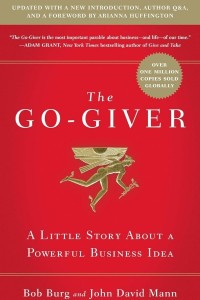
The Go-Giver, Expanded Edition: A Little Story About a Powerful Business Idea
It is a fictional book about Pindar, who is a multi-billionaire like Manoj. He freely gives his time to help people get better and better. He shows that by connecting with other people and working with your gifts, you will end up being great.
I love that. If you had the opportunity to travel back in time, what advice would you give your younger self?
I would not change a thing. All the hard parts of my life made me what I am.
Any pointers? You can go back to when you were twenty years old and whisper in your ear, what would you say?
Do not worry about all the stuff that you are going to worry about. It is not going to happen to you.
Just take it easy.
Just enjoy the journey. It is so short. Just enjoy it. One thing I did not do was I was always worried about business, taking care of my customers, worrying about the kids, worrying about my wife, worried about making money for the house. I would just do that without worrying. Enjoy a little bit more.
Enjoy a lot more.
My wife had the right idea. I did that wrong.
Michael, next question, what is the best investment you’ve ever made in yourself?
In yourself, by far and away, there is no other investment. I have spent hundreds of thousands of dollars on education, and I have made more money from education than anything else I’ve ever done. I would have wanted to be a doctor, but I love what I do, and I do not work. I just do what I do to have fun, and I make money.
Now, what is the worst investment you’ve ever made, and what lessons did you learn from it?
I invested in a new build in Georgia, and I was not in charge of it. I did not pull the permit. When you have somebody else in charge of it, you have to know your partners. Knowing your partners, it was a bad deal. We lost, and it was 2009. I lost $6,000. It is nothing compared to what I hear many people are losing in real estate. It was a lesson, but it was not a bad one.
Next question. How much would you need in the bank to retire today? What is your number?
It does not matter the number. I am not going to retire. I could have ten billion in there. Just like Manoj, he is not quitting. He was 65 or 70 years old. He is still doing what he wants to do. It does not work. When you’ve been doing it so long, and you enjoy it, I am going to build a house just because I want to. There is no reason. If I do not sell it, I do not sell it. If you do for a living what you do for free, you will never work. If you end up doing it and love it, you will be good at it. You do not mind putting in the 12 to 14 hours a day, and then you will end up making money. It is hard not to.
Next question, if you could have dinner with someone, dead or alive, who would it be?
Jesus Christ.
Right on.
He has a wisdom about him that is beyond reproach. Every psychologist in the world says the same sentence, “If you praise those who persecute you, you will never need therapy.”
Turn the other cheek.
It is a hard part for me. I am Italian, and I break bricks.
Literally, he does.
Next question. If you weren’t doing what you’re doing today, what would you be doing now?
Like a hobby or something you dreamed of, music, racing cars, something out of this world, instead of building a house and doing multifamily.
Fighter jet pilot. That was a riot. There are no triggers on it. It is all taken away when you are a civilian, but when you are flying a fighter jet and you shoot missiles and drop bombs, that is probably cool. I would probably be a fighter jet pilot.
Michael, book smarts or street smarts?
Street smarts by far and away. I am probably going to say this wrong. Book-smart education teaches you to work for somebody and not be an entrepreneur. Street smarts teaches you how to figure things out. I would much rather know how to figure things out than to learn something and think I know it. Once you learn it, that is all you know. I know a lot of people who are working for somebody, and that is all they know. Street smarts is figuring it out. We figured out a million things.
Book smarts education teaches you to work for somebody. Street smarts education teaches you how to figure things out yourself. Share on XLast question, Michael. If you had a million dollars in cash and you had to make one investment today, what would it be?
Sit on it right now.
Invest in cash.
Cash-heavy. You caught what I was going for. Sit on it. I will be ringing the bell relatively soon, within the next 6 to 12 months. I am just going to tell everybody to start dumping their money into real estate. Real estate is the best investment. 90% of millionaires are made by real estate. Accidental millionaires are made by real estate. Real estate is the best investment, the least amount of effort, the greatest tax advantages, and you make money for doing nothing. If you guys can find something better than what we do, let me know.
Bitcoin or crypto.
That hurt a little bit.
Michael, just to all of our audience, what is the best way that people can reach you?
Michael Mannino with Ark Investment Ventures, or you can see me at the US Open every year on July 4th in Disney. I like breaking stuff. If you guys want to try to compete against me, let’s go have some fun. Ark Investment Ventures, Mike@AIVenturesllc.com, or hit me up on social media, Mike Mannino Senior.
You have your own podcast, too, right?
I do. I do not want to mention that. I want you to do it. Thank you very much. Driven: Unscripted Success. We’re looking for people who are successful and how they got there. I have got some crazy stories. One girl was at the bottom of 9/11, and she saw one of the chairs fall out of the airplane. There are some crazy stories of people doing some crazy stuff in this world. I got a senator and what he was doing about trying to stop people from shooting up schools. It is cool. It is fun. Thank you for being on the show. I really appreciate you guys.
Thank you, Michael. Thank you for being on here with us. Really appreciate your time. Thank you for coming.