
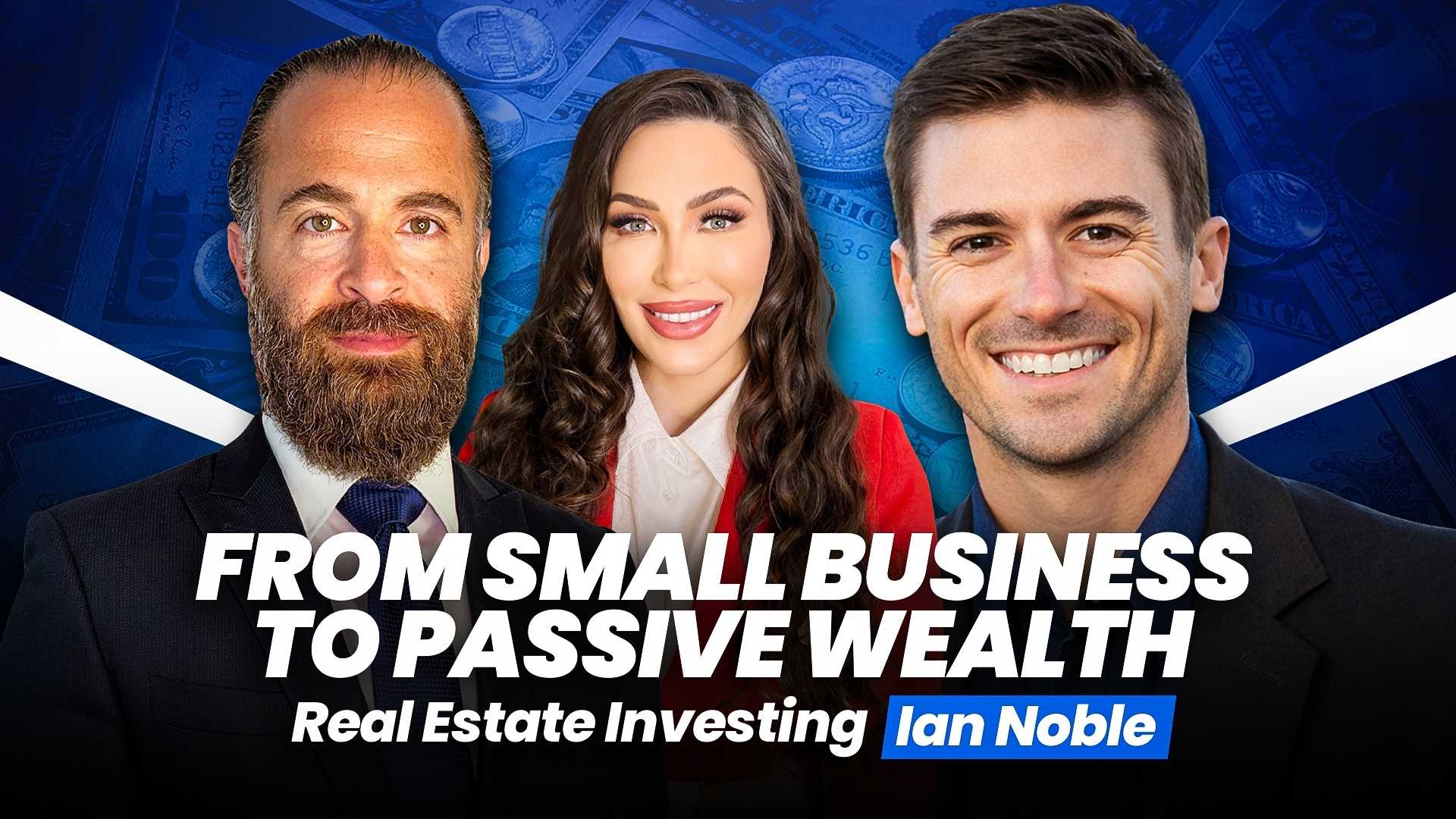
Transitioning from a hands-on business owner to a savvy real estate investor can feel like navigating two different worlds. In this deep-dive post, we sit down with Ian Noble, a former dry cleaning business owner who successfully made the leap to full-time investor and now manages a boutique private equity firm focused on mobile home parks and private lending. Discover how Ian shifted his focus from active, day-to-day property management to strategically cherry-picking large-scale passive investments like syndications and feeder funds.
We uncover:
- The crucial turning point that led Ian to seek passive real estate opportunities—and how his major tax event became a catalyst for change.
- Why the “Feeder Fund” structure is a win-win for investors and sponsors, dispelling the myth that LPs are always diluted by adding an intermediary.
- The essential criteria Ian uses to vet operators and deals in a market filled with “flashy” returns, prioritizing low-risk, trust, and transparent communication, especially in today’s emotional investor environment.
- Insights into scalable asset classes like Mobile Home Parks and Debt Funds, and how they offer predictable cash flow and long-term wealth creation.
Whether you’re an entrepreneur looking to diversify your assets or an active investor contemplating a shift to passive income, this is a must-read guide on leveraging real estate to achieve true financial freedom.
Get in touch with Ian Noble:
- Website: https://runsteadyinvestments.com/
- LinkedIn: https://www.linkedin.com/in/iannoble1/
- Facebook: https://www.facebook.com/people/RunSteady-Investments/61566763725759/
- Instagram: https://www.instagram.com/ian_invests/
- YouTube: https://www.youtube.com/@RunSteadyInvestments
If you are interested in learning more about passively investing in multifamily and Build-to-Rent properties, click here to schedule a call with the CPI Capital Team or contact us at info@cpicapital.ca. If you like to Co-Syndicate and close on larger deals as a General Partner, click here. You can read more about CPI Capital at https://www.cpicapital.ca.
#avabenesocky #augustbiniaz #cpicapital
—
Watch the episode here
Listen to the podcast here
Important Links
- Ian Noble on LinkedIn
- RunSteady Investments
- Blackstone
- Sam Zell
- Warren Buffett on X
- Capitis Mortgage Investment Corporation
- CPI Capital
- Buy Back Your Time: Get Unstuck, Reclaim Your Freedom, and Build Your Empire
- Who Not How
About Ian Noble
 Ian is the founder of RunSteady Investments. He brings with him the experience of owning a small business in Austin, Texas consisting 14 locations and over 90 employees. After 14 years, he successfully exited the service industry business in 2023.
Now, his sole focus is on helping people passively invest in real estate with mobile home parks and private lending funds. Ian brings 10+ years of experience as an active investor in the Austin real estate market and in Colorado.
His portfolio includes residential and commercial properties. He also passively participates in various syndications as a Limited Partner in mobile home parks, self-storage facilities, private lending, and debt funds. Ian earned his degree in economics from the University of Texas.
He and his wife Lauren live in Austin, TX with their three children. In his free time, he enjoys running marathons and international travel.
From Small Business To Passive Wealth: Ian Noble On Real Estate Investing
Introduction & Business Overview (REID/CPI)
Welcome back to the show.
We have a great show for you. We have a great guest. He manages a boutique private equity firm where he partners with sponsors and comes into those deals. We’re going to get into all the mechanics. Before that, let’s touch on a bit about our business. Initially, CPI was focused to be a multifamily-focused company. Later on, we realized we want to be more of a real estate private equity firm and not only be restricted to one asset class, which is multifamily value add.
Now, we’re doing development, PTR deals as well. The equity side of business, the capital, the money that’s needed for the projects is such an important component of our business. The majority of that comes from banks and other types of lenders but a big portion of it comes as equity from investors. For larger institutions, these investors are institutional investors like university endowments, pension funds, and sovereign wealth funds.
In our case, these investors are retail investors in most cases. At times, we also partner with quasi-institutional investors. These are investors that have their own database and their own circle of influence. They cherry pick these best deals to come and partner with other sponsors. That’s what our guest does. We’re going to bring him on. Ian Noble is our guest. Thanks for being here.
Thanks for being here, Ian.
Thank you for having me.
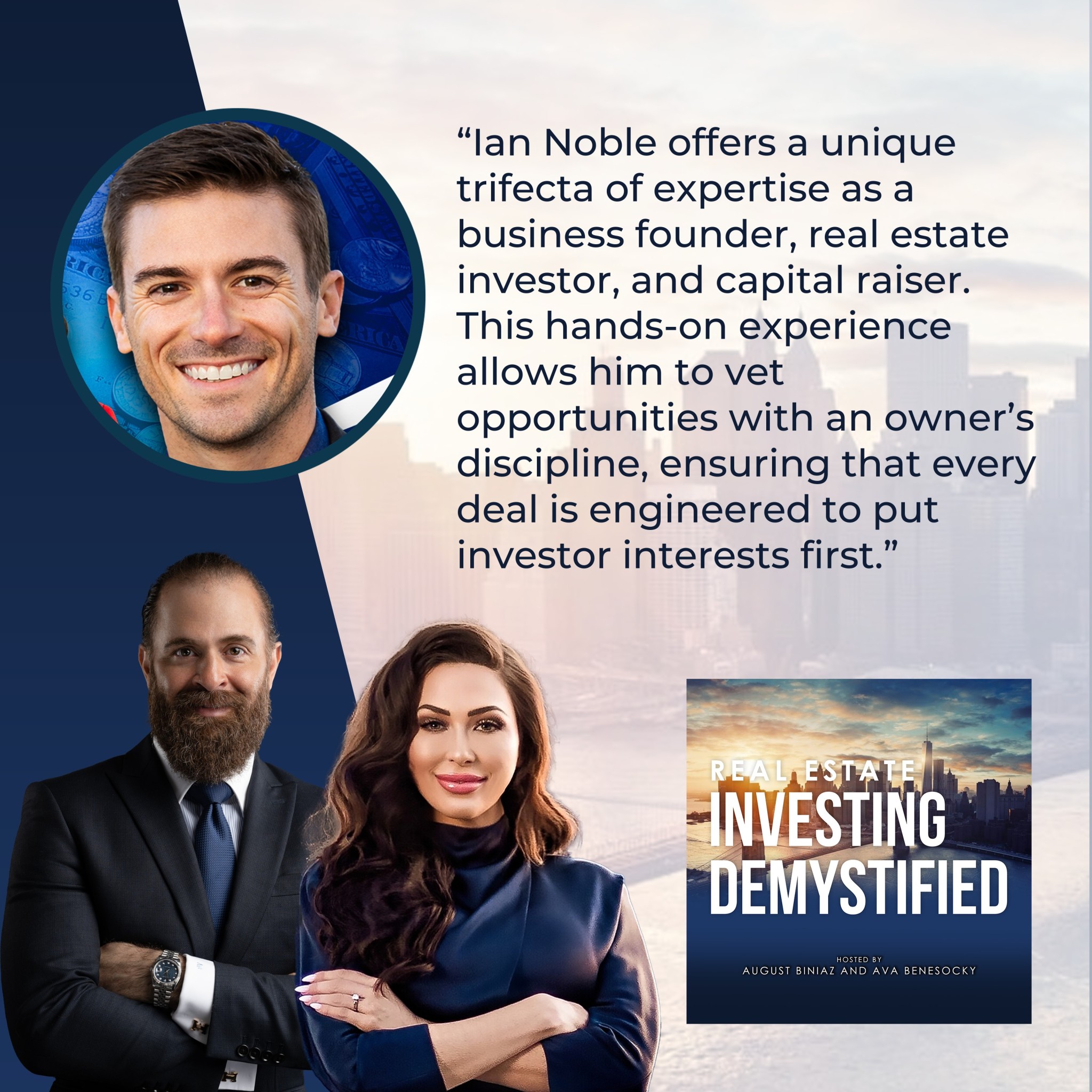
Before getting into the mechanics of real estate private equity and feeder funds and so on. Maybe you can tell us and our audience a little bit of your background. I know you ran a business for a long time, but then you got into the space. Talk to us about that and the transition. What was that? What excited you about this side of the world, this side of business and you came to this side?
Ian’s Transition From Active To Passive Real Estate Investing
Dating back to day one, I had a dry-cleaning company that was a family business. I bought my father out from that, grew that, and sold that in 2023. Along the way, everything that I did was put back into real estate. The income that I brought in from the dry cleaners, I then started dabbling into real estate. I was always on the active side.
I was buying single-family rentals, commercial properties, locally and mostly. Once I sold, I transitioned into being a full-time investor and leading to where I’m at, which is helping other people get involved with these investments as well. I like how you mentioned earlier about cherry picking. That’s exactly what my job is. It’s fun. I get to be the investor that looks at it first and picks who we’re going to do business with. It’s been a lot of fun along the way. I’m entrepreneur-at-heart and I love real estate. There’s a lot of synergy between the two. I like helping people that are entrepreneurs get involved with it.
You mentioned the active side of things. You started out doing projects on your own. You were actively managing, operating, renovating, and then selling the projects. Did you at some point say, “Hey, this isn’t for me. I more so want to be on the LP side and more so on the passive side?” Talk to us about that.
I have stayed by and hold my entire career. In fact, I only recently sold off one of those existing original properties. I live both sides of it. I can tell you there’s a lot of benefits to both. However, being on the passive side is a lot less worry. Most of the time, the tenants are great. I’ve had situations with bad tenants leaving places in bad shape.
For me, the transition came for two reasons. Number one, I wasn’t introduced to the world of partnering up and getting into these larger projects when I was running the day-to-day in my business. I wish somebody would have come and told me that that was an option. Instead, I was just doing everything solo. It became something good for me and my family. However, I did miss out on a lot of opportunities that partnerships would have brought.
Passive is very nice because sometimes these active landlords will look at benefits to the real estate. Even if they’re the sole owner, if you look at cash flow or expenses that go into it, often it’s not what it seems. Real estate is a long game. You folks know this. Passive income and getting into the larger projects with groups that are running the deals is nice because you’re dedicating your time and energy upfront and money but you’re not having to run day-to-day.
I’ve been excited about finding those opportunities, especially at this season in life. I have young children. I don’t want to work all the time. As you know, real estate is a full-time job. There are ways to play the game without being swamped with work and busyness. That is why the passive side is so enticing.
There are ways to play the game without being swamped by work and busyness. That’s why the passive side is so enticing. Share on XDo you recall when was the first time you learned about syndications, funds, and this idea of passive investing? I was in real estate for well over a decade. That was the first time I heard about the term syndication. I remember exactly where I was standing. I was standing in our spice kitchen in Vancouver, where I heard about the word syndication. I would start Googling it and start watching YouTube shows on it. I realized what it was and this process of raising capital from people. Was there a situation where you were approached by somebody to invest in these types of products? What was your story? When was the moment you realized that?
Ian’s Entry Into Syndication/Feeder Funds (2023)
I had heard about it in late 2019 or 2020, but I didn’t get seriously involved until 2023. That came out of personal need when I sold my company. Majority of real estate is about the depreciation and write-offs. I was going to have a large tax burden coming up. As many people that are faced with that scenario, you can only do so much yourself. That specific year was October of 2023.
I dove and, all of a sudden, I stopped working when I used to put in all these hours back in my dry cleaners. I needed to figure out how to best protect my capital moving forward, how to keep what I earned, and not give it back to the government. Syndications for me became a mission in 2023 again starting from personal need. It evolved from there.
Was there a particular asset class that you felt more bullish about personally or that you were looking to invest in? Was it a situation where you saw different types of deals coming across your desk and wanted to be involved with them?
I like all the different asset classes. Eventually, I ended up in mobile home parks first. Primarily because of a relationship or trust that I had built in a sponsor that I had listened to over the years and heard about. I think that there’s good opportunity in every asset class. Anyone you talk into real estate will say the same thing.
It’s all a different game. You can have incredibly successful single-family homeowners in your local market that laugh at people that say, “You need to go bigger and scale larger,” when they’re doing just fine. On the flip side, you hear people that are in larger spaces say, “Everyone graduates from single-family homes and they get into something else.”
I like real estate because no matter what the asset type is, it can pencil. If you can understand it, you should invest in it. For me, mobile home parks were what I gravitated towards. It was something that felt unobtainable, especially from a time commitment perspective. When I was running my business, I was very much an owner-operator, and as I mentioned earlier, working a lot. That was unobtainable.
I like real estate because, no matter the asset type, it can pencil. If you understand it, you should invest in it. Share on XI realized just like multifamily and the ability to scale through units. It’s powerful what you can do in terms of creating value, the value-add component, and the tax benefits. That’s where I focus most of my time. However, I like them all. There’s no bad pattern. It just what fits the investor or your appetite the most.
Your comment about single-family, type of investors compared to multi or to people doing larger deals. The grass is always greener on the other side. Ava and I joke about this sometimes. We run a private equity firm. We’ve done hundreds of millions of dollars of deals. When it comes to our personal net worth and comparing it to a builder that builds a few luxury homes a year, they’re making $5 million to $10 million a year from selling those few homes.
Relatively speaking, the grass is greener on their side. Them looking on our side, they might feel the same way. If you’re looking at a shorter runway, if you’re looking at a shorter time span, single-family would be superior in some ways to multi or other asset classes on the commercial real estate, a syndication, or fund model.
Long term, when you’re looking at scalability, commercial real estate is much more scalable. The syndication model and the fund model, is much more scalable than the model of just taking your own capital, growing, and doing your own deals over the years. The ceiling is much higher on the private equity side of things.
I completely agree with you. People get into single-family often because it’s the most relatable. A lot of people live in a house. They rent a house or wherever they start. That’s the natural path of progress for anybody. You’re right, you come to a point where you realize this is difficult to scale. A lot of people have this misconception that if you’re a landlord and you have a couple of rentals that you’re going to make a lot of money from it. That’s not the case.
Cashflow on these units is not going to change your life in the beginning. You might as well jump in and try that at a larger scale. Again, I tell people that are interested in it to just get started somewhere. It doesn’t matter what class you get into. You’ll eventually figure out what you want to focus on or dabble in many things. I don’t think in this business to be successful, you have to focus only on one asset class because there’s lots of opportunity.
I wanted to switch the conversation a little bit if you don’t have any other questions.
I have a couple of comments. I also don’t want to push and be an evangelist for multifamily or funds and syndications. Through the years of my real estate experience, I’ve seen a lot of people involved in single-family that have done tremendously well. They’ve set themselves and their families up. In Vancouver, real estate prices over the last few years have been difficult.
Looking at pre-2020, from 2000 to 2020, real estate prices went up 500% in Vancouver, which is one of the second largest cities in Canada. People had made fortunes. A single-family medium home price in Vancouver is $1.7 million. People are owning a few of them. I had a landscaper that worked for us. This wasn’t a landscaper cutting your grass. He did a little bit more extensive work. He owned three homes, clear title. These are $2 million. He had $6 million net worth. That was aside from his company.
When I used to build homes years ago, I used to look at this guy. This guy can’t even speak English very well. He’s one of the most unsophisticated guys. The guy has worked nearly $10 million. I started looking at single-family types of investors differently. The same thing in the US. One thing that you got to be careful about when it comes to single-family investing. If you’re getting into building this long-term wealth through rentals and building equity on these homes, at some point, it’s no longer passive. You have to deal with tenants. You have to deal with potential lawsuits. You have to deal with marketing.
You become a business owner just dealing with rentals. If you get into renovation or building homes as well on the side, it’s its own business. It’s hard to keep your main business, your main profession, and also do single-family. It is a great way of building wealth. People in California, New York, Vancouver, and Toronto can attest that. Most millionaires living in those large cities have made their millions through owning their primary residence because the prices have inflated so much. Go ahead if you want to switch the conversation about something different. Where did you want to go with it?
I was going to say just dealing with passive investors over the last few years has been an emotional environment.
I wanted to get into the mechanics of exactly what it is that Ian does. In our case, I want to build a foundation on this so our audience would understand this better. We’re very focused on what it is that we do, multifamily value add. What that is it’s buying somewhat older apartment communities, fixing them up, and then selling them. We’re basically your conventional fix and flippers, but just on a larger scale.
We also do build-to-rent. It’s development. We build purpose-built rental communities which is an asset class called BTR. We’ve partnered with a local developer in San Antonio. We build these BTR projects. Those are our two verticals. Those are two of our focuses that we spend our time and business on. Our investors come in and invest with us.
Another component of the business is also raising capital, raising the equity. Not debt, but equity. Debt is also you have to go on and get the debt. That equity that we raise comes from, in most cases, retail investors. Our average check size is around $115,000. That’s a lot of investors you have to go, meet with, connect with, and do all the legal process to be able to raise money from. In our case, Canada and the US are overseen by multiple securities commissions in two different countries, tax governance, and so on. A lot of work goes there.
At times, a lot of your time and resources is spent on raising money and dealing with these investors. It becomes somewhat overwhelming at times, especially if you’re doing more and more deals. For us general partners, it makes sense to in a way. I might not be wording this correctly, but contract out a portion of the equity. On our last equity raise, it was a $4 million equity raise on a built-to-rent project that we did in Apollo Oaks in San Antonio.
Approximately, I would say half of that came from other general partner types, other boutique firms that have their own investors. They brought on that portion of the equity for our firm. How does that help us as an investment firm? We don’t have to spend so much time and resources on raising money because we already do that. We have to part ways with a portion of our fees and carried interest to bring on another partner who has their own investors. We might have to give better economics to this group that’s coming in through this one fund manager or general partner.
It makes sense because it allows us to do more deals. This is the same idea that sometimes investors ask, “If this deal is good, why don’t you guys just do it yourselves? Why don’t you just do it with your own money?” At some point, we run out of our own money. Same thing with investors, general partners, and fund managers. At some point, they run out of their own money. They have squeezed the juice out of their database. They can’t.
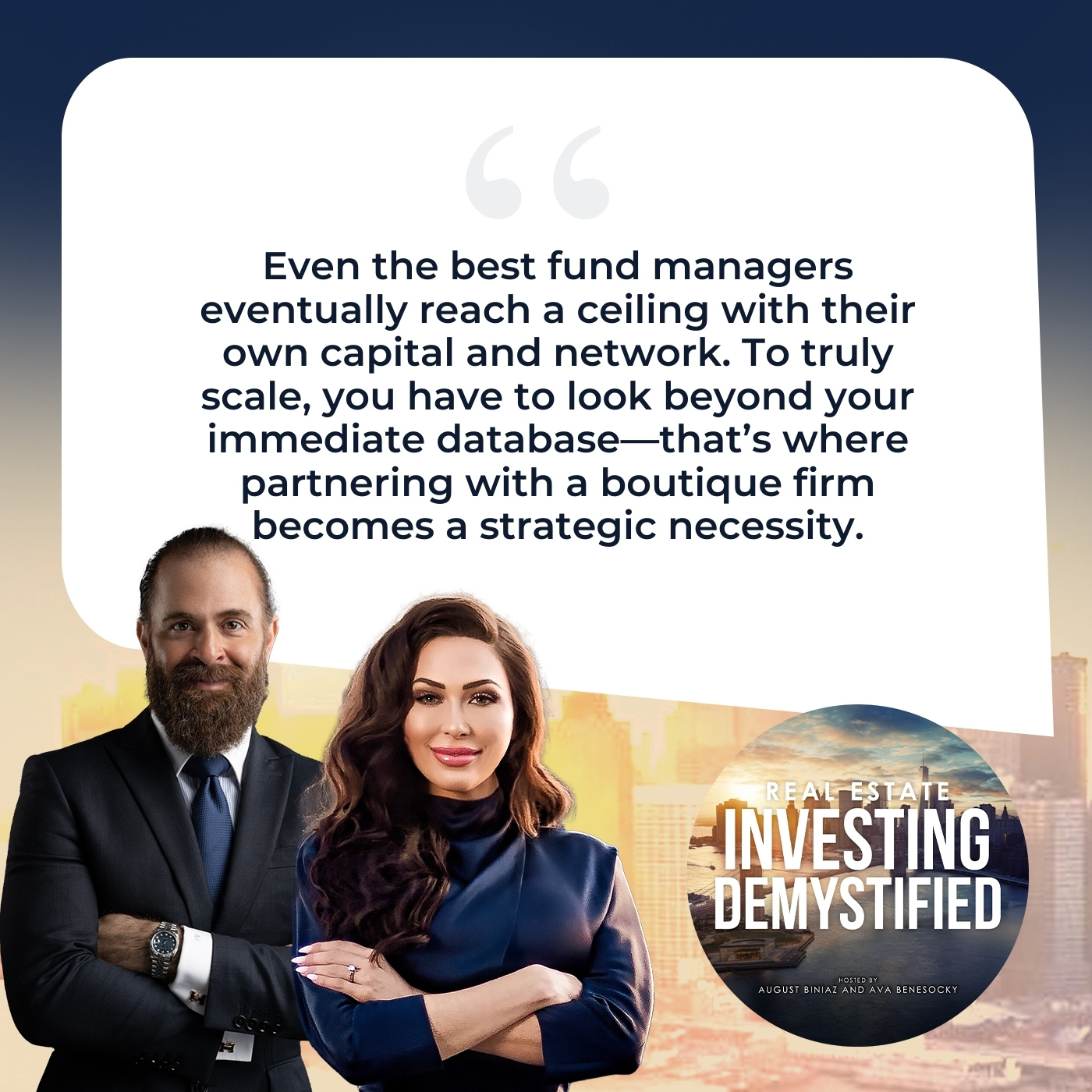
This is going to be hard. It makes sense to bring on boutique firms. That’s what Ian’s firm does. Give us a crash course on exactly what it is. We’re focused on multifamily and BTR. Ian is focused on other asset classes, potentially on these asset classes as well. Give us a crash course on what it is that your firm does for somebody who’s never heard this before.
Mechanics Of Feeder Fund/Master Fund Structure & Value Proposition
Our focus is mobile home parks and private lending. You hit the nail on the head with what these funds are designed to do. When a lot of people raising money, it’s difficult. You use the example of a $4 million equity raise and farming some out. What I had first learned very quickly was from running a small business, everything was about my P&L. I had thin margins. I knew exactly where the money was coming from and my expenses.
From the investor standpoint, I had that hat on of a business owner first when I first got into this industry. I met somebody who was a capital raiser or a syndicator. I sit down. I get a big playbook of all of these options that I can invest in. I thought, “This is interesting.” There’s a relationship component to it. Is this person getting in the way of my returns?
Forgive me, when you sat down with this person, he brought a playbook of different options he had for you to invest in, different asset classes? Is that what you mean?
It wasn’t a menu. There were so many options. Again, this is coming from being an active investor and not knowing what this world of syndication looks like. I falsely presumed that because that was happening, as an investor, I was going to take a lower return than if I was to go directly to the operator. You guys are in the industry, so you know this is not the case. As an LP, that was thought number one.
What can you do? Number one, I asked the question. I said, “What is stopping somebody from going around you directly to the operator? Let’s call you a middleman for a lack of better terms. If we don’t know, again, coming from outside space.” You described it well. The reason that this works, especially in syndication or fund to fund managers is because raising capital is difficult. There’s often time constraints when you’re getting into raising for a particular project. If you have good relationships with other people that can raise money within their private networks, it becomes a win-win for everybody.
Maybe slightly higher economics or fees are going out through preferred returns or profit splits. That can be looked at as the cost of doing business in order to get that deal done and to get the equity that you need. A lot of operators that are in this space are willing to do that. If you wanted to raise a million dollars and your average check size is $50,000, you have to recruit twenty investors to come in and handle twenty PPMs and everything that comes along with it.
What if you went to two partners or one partner? They said, “I’ll bring you the million.” I believe operators begin to scale and see that this is a good path. It clears up their space to be able to focus on what they’re good at like broker relationships, underwriting, and acquisitions. Capital raising is a part of that you can certainly take on yourself. Why not outsource it if it makes you free up time for the things that you’re good at?
That was my misconception as an investor before being in the space. I thought I’d be penalized by going through somebody that was a syndicator. I was wrong. In fact, many of us position it to where you’re getting a better deal. Instead of an investor writing a $50,000 or $100,000 check, we’re coming in as a group with a million or two million. We have better economics.
The managers can still take fees inside of there and still pass along better returns to their investors than what they could get going as an individual to the operator themselves. It was eye-opening to me because again, I thought this is just one fee in the way. You think about that in logistics, business, and any sort of operation that people run. I was incorrect. I do like that it compliments all parties.
I’m learning more about the space and understanding how these funds are put together and these deals are done and how the feeder fund and master fund structure works. The first issue I had was the same concept you talked about. Are the LPs getting diluted who go through the feeder fund? The first question that came to my mind is, “The LPs can just circumvent the feeder fund and go directly to the master fund and the master fund operator. It makes the job of the feeder fund obsolete.”
That was my initial view of it. As I learned more and more about the space, I learned about a few components. One is that these feeder fund managers are somewhat diverse just like yourself, debt funds and mobile home parks. Rather than going out there for an LP and spending their time and resources to learn about how debt funds operate or who the best debt fund operators are. That job has been done by the feeder fund manager or the boutique investment firm manager who’s probably spoken to tens of different debt funds.
It has cherry-picked the best one as I mentioned earlier, and has brought that fund to their investor pool. They’re putting their name and reputation on the line. They’re bringing that deal to them. When it comes to dilution or other factors, when the feeder fund manager goes to the master fund or feeder fund manager goes to the sponsor and says, “I’m bringing you a group of investors. I wanted to receive better economics.” It makes sense for us.
It allows investors to have not only a second set of eyes, but a sponsor’s experience, fund manager to vet a bunch of different deals and bring those deals to their audience. It serves a purpose there. We discussed, as far as economics, they’re not getting diluted. The feeder fund general partner is asking for better economics. On the side of the master fund manager, the lead sponsor on the deal, or somebody who has a debt fund, there is a cost associated with going out there raising money.
It’s not a button you press or a light that you turn on and a bunch of investors jump in. Just like Ian alluded to, if you are going out there to talk to 30 investors, that’s time for your investor relations team. That’s time for the top of the funnel bringing these leads in. There’s a cost associated with getting investors. They’re not just people’s inner circle. That machine has to continuously work. There’s a cost associated with it.
By contracting a portion of that out, it’s not a total loss by giving better economics to the feeder fund. It might work out beneficial. When I learned that, I’m like, “This is a very important part of the business that takes place.” This doesn’t only exist in syndications and boutique firms that we’re discussing. This exists on a larger scale as well. The term feeder fund and master fund comes from these larger firms that allow retail investors to participate in some funds that are only available to institutional top investors.
When Blackstone does a $10 billion fund, their investors are only these institutions like university endowments, pension funds, and life insurance companies. Their minimum check size is $50 million in these large funds. There are feeder funds that also invest in those larger funds that allow more retail, smaller check size to come in. It’s a much-needed space and mechanism that’s needed in our space.
With that being said, it doesn’t always have to be a feeder fund or a fund of a fund. Even if you do have somebody who has an investor database. They can still come in for a million dollars. Maybe they want their investors to be serviced through the lead GP’s backend office as well.
That brings a great point and that point is getting circumvented. The feeder fund manager is always thinking about, “I just brought all my investors to this deal. They have gone and invested into the master fund. Do I have concerns that the master fund manager is going to poach them?”
They have the names and everything like that. You can shield the names under one feeder fund entity if you wish. I wanted to make note of that. There is a way where somebody who has an audience can bring him on and use the backend office be fully functional.
What I want to go with this and something I’m sure you’ve thought about as well, is longevity. If I’m an LP, I’m thinking about investing in these types of products and I meet you, Ian. You bring these different deals in mobile home parks and debt funds. You have all these options. If I listen to this show or watch this video and I understand it well, I’d rather go through you than directly to the fund manager. No question at all.
My question is long-term. What is the plan for you long-term? The reason I bring that up is because the first few deals that we did with CPI, we basically behaved as a feeder fund. We brought some capital to some other sponsors. The reason we did that is because we had not built the acquisition infrastructure, the asset management infrastructure. We didn’t have the boots on the ground.
We were just learning the business. Most of our investors at that time were from Canada. It made sense to do a few deals in this structure to build that track record that’s needed and learn on the job. There are others who we know are people who invest with us as well. They’re comfortable being where they are.
They want to behave as a boutique investment firm that goes out there and brings deals with other sponsors. That’s not a business they want to get involved with. I’ve always wondered what is the long-term plan? Is it to continue staying where it is? Is it a bridge to get somewhere? How do you see your firm long-term?
That’s a great question. When I look at any of these deals, especially what I do in raising funds. The long-term goal is we’re going to make sure that those investors get as close to or better than what we had predicted. I say that because I’m an investor too in every deal. I put my personal money in there so I want to win there.
The business component of it is in this game of raising capital and getting pooling money together. A lot of times, you want to make sure that you’re aligned with the people that you’re getting in business with. When these investors come first, often the syndicators or fund managers, their big payday will come later at not even a refinance at a sale.
A lot of times, you want to make sure you’re aligned with the people you’re going into business with. Share on XUsually, it’s when they’ll say, “I recognize the fruits of my labor from raising all this money.” I had a conversation about this the other day. It’s interesting because I feel that a lot of people that get into the space that may be a difficult concept to grasp. You’re doing all this work now, but you’re paid tomorrow or years down the road.
My long-term goal with this business is I was fortunate enough to be able to take this business and grow it organically through the lens of an LP investor because that’s where I started. I’m trying to serve the needs of myself and my family as a personal investor. You win in a couple of ways. If you’re doing it like that, you win as a passive investor. You can win long-term as the capital raiser, let’s say, in seven years.
The short-term wins are going to be as an LP in these deals. Eventually, if you get into enough full cycle deals or you’re holding enough, let’s say assets as you’ve grown over the years. It starts to create a flywheel effect of several different income sources. That’s what I like and I think it’s powerful. Where I pivot to beyond mobile home parks and private lending funds is to be determined.
As I mentioned earlier, I’m an active investor. I like all types of real estate. I like triple net retail spaces and getting involved with businesses. These are all things that I think are in the conversation years down the road as the network continues to grow. To your point, savvy investors could go to the operator, but they don’t know them and they want you.
You guys spend a lot of time developing relationships. People know Ava and August. That’s who they want to be with. That’s important because they know, “If I can trust you to communicate with me, I trust your judgment. That’s somebody I want to do business with.” When you guys identify a build-to-rent in San Antonio, your Florida investors don’t know that person in San Antonio. I’m just making this as an assumption. They don’t know the builders, the contractors. That trust factor is not there. As you all know, real estate-to-people business and it comes down to trust.
I have learned the hard way in my early stages before getting this company together what it looks like to lose as a passive investor. It’s not fun. If I were to look back at this now, it was an expensive learning lesson. It was well worth it because it made me better at what I do now. Had I had that trust and that relationship with someone that I knew on a higher level, then the whole thing could have been avoided.
You hope.
Bad things happen and good things happen in real estate but it comes down to relationships. My long-term goal is to have that network of trust that knows that he’s putting his money in my money. Everyone else is in good faith and low risk deals because that is my risk appetite. I tell people that if somebody says your returns are too low, then I like to recommend them to someone that has higher returns. I’ll argue that my risk level is on the very low end. If that’s what somebody cares about, then great. Take a look.
How do you structure your deals? Do you create a single purpose vehicle for one deal and your investors invest there and that vehicle invests into the main vehicle that the deal has been structured in like a feeder fund model? Do you have an evergreen type of fund that people invest into and then you pick and choose where you want to allocate those funds?
Mine’s been single purpose or an SPV to where we’re forming an entity and investing directly into another entity. I have yet to go the route of having the all-encompassing documents that allow you to place where you choose. It’s been one at a time.
Investors are coming to you because they trust you. It’s been an emotional time for investors over the past five years when COVID hit. Right after COVID, everybody started re-entering the market. Investors got very excited with cheap debts. You were in this space then so you know what happened. Interest rates rise. Fast forward, a lot of investors have lost their complete investments. People have been wiped out.
When you’re talking to LPs, you have to understand that there’s some emotions involved. LPs have been through a lot. When you pick and choose the deals that you want to go into with your LPs’ equity, what is it that you look for in an operator? What is it that you look for in a deal? I’m sure you have your own underwriting that back of the napkin and underwriting that you do before you enter into a deal.
Two different questions. He looks for an operator that is different than the scorned LPs who’ve lost money over the years. When you talk to somebody who’s lost money, which is very common. There was so much LP equity wiped.
It is two separate questions but it ties in together because LPs are very hurt, some of them. When they want to get into passive investing, they don’t want to completely let it go.
Not only are some of them hurt, but also their word-of-mouth is the strongest thing. Somebody might say, “I got this deal. I’m thinking about investing in this multifamily or in this mobile home park.” It was, “I did that. I lost a bunch of money. Don’t do it.” There is a lot of stigma, fear and concern in this space in investing. As this space is known alternatives compared to what’s on Wall Street and conventional investments that are available. Your question is more about how to deal with investors who’ve had bad experiences or they might be hyper cautious at this stage. Is that fair?
Talk to me about some of the conversations that you’re having now.
Vetting Operators/Partners: Communication & Trust
To your point, a lot of people had rough situations over the last few years perhaps had their whole investment wiped out. I make sure to align that I’m a low-risk person and that the deals that we were looking for don’t have major upside. It’s great if it comes but it may not. You talked about operators, Ava. A lot of my time spent is in two buckets. Growing the investor base and continuing to have their personal relationships mostly Texas. You talk about your local market. That’s generally the strongest tie that you’ll have with people, especially if you can build face-to-face trust.
The other side is vetting operators and figuring out what they’re like. In this position, people come and pitch you deals all the time to go and raise capital for them. It helps the whole operation. Before looking at the underwriting, you can surface-level look at a deal. I need to dive deep into who that person is. I try to spend a little bit more time getting to know them rather than be like, “I feel like raising this quarter and a deal came across my desk. Let’s do this.”
These relationships are a long play and painfully slow sometimes. I tell people in my investor group, “I’m going to invest in them first. I’m putting $50,000, $100,000 or more into their deal. I’m going to see how they communicate then I’m going to make sure it aligns with what I like.” They have to run a tight ship in order for you to feel good about going to friends, family, and colleagues in your circle to bring that to the table. You got to be able to sleep at night. If we’re going to raise for that person, then it’s background check, operator history, visiting with them personally, and flying out in person to the site.
I do all these things. At the end of the day, a much more important than my own money that’s going to be in the deal or the people that I’ve told, “This is going to be a good investment for you and your family.” The whole concept is I have to feel good about making sure I could tell my wife, my family and friends, “This is something that I’m confident in.” It can curb your growth because you would love to be able to constantly be able to raise these deals.
At the end of the day, what matters most is that I feel confident putting my own money into a deal—or recommending it to my family. I need to know it’s a good investment for the people I care about. Share on XThere’s been some relationships I’ve had that are okay. I may invest in them as a personal investor, but no right off the bat that I wouldn’t partner with them for raising as part of their deal. That’s simply because you find out quickly after the deal is closed. You know what they’re like. It’s not to say they’re bad operators or whatsoever, but the mechanics of what we’re looking for as a team and the ability to communicate. A lot of people look over that step.
You can be an amazing real estate operator. In the space of bringing investors into your group, you got to be able to communicate, give them updates, good or bad, on a scheduled cadence. I’m looking for that person. Is there an ounce of doubt in my gut that I think something’s off here? If there is, you just have to use your instinct and say, “There are a lot more fish in the sea. I’m going to go look elsewhere.”
You don’t want to just take the step for the sake of a good deal. You all know pro forma is in the underwriting that you’re shown when you’re getting into a deal. It’s a marketing brochure. It will never perform it pro forma. It will be better or it’ll be worse. It’s our job to try to take that blurry line and figure out how exactly I can help our team, our investors and network to the best of my ability.
You got to like them too. You spend a lot of time over the life of these deals. I want to be able to call them on their cell phone. I don’t want to get sent to some investor relations team or 1-800 number. I like knowing that this person, if stuff gets hard and they get kicked in the teeth metaphorically, then they will be there. They’re not going to let this thing fail. You have to look through this in your partnership to know.
You want to know that they have failed. Failure is good. It’s lessons learned and we all need it. If somebody’s flashy, says how good the returns are, this one’s going to knock it out of the park. I almost have a guard that goes up much more than someone that’s giving me an average deal because I’m like, “Why are you selling this to me so hard?”
What you’re saying resonates a lot because it’s almost as if it’s like a first date, It’s like dealing with some of these investment firms, initially. It’s just so much sunshine and rainbows. They’re on their best behavior. That’s the experience we had. We partner with two different groups on our first three deals or two deals with one group and a third deal with a different group. I had an terrible experience with their principles just bumping heads all the time. I felt they were master gaslighters. If I’m asking a question, they’re like, “You guys are not doing a lot of deals. That’s why you ask a lot of questions. Your team is sitting around asking questions.”
It’s our job to ask questions. Unfortunately, deals didn’t go that well at all. We bought them in 2021-2022. Thankfully, we didn’t lose investor money. Dealing with those sponsors, their real faces came out. They were not very nice or good people. Initially, they would talk very professionally. They would talk about private equity. On these phone calls, they’d be soaring every second word and gaslighting again saying, “You guys have too much time on your hands. That’s why you keep underwriting our deals. You’re sending ghost shoppers to our properties because you have nothing to do.” We just did those deals just to gain a track record, right? Our plan was to be a fully functioning real estate private equity firm.
It was a terrible experience. You make a very good point there.
Gut feeling is very important. At least with one of these sponsors, I had a bad gut feeling but I still went ahead with it. One of them was a master actor.
I have met those people, too. You’re right. Sometimes people are good. I thought I was a pretty good judge of character. I’ve been fooled before with tons of reps.
I would even go as far as saying, “Show me the type of communication that you send out on a monthly basis for some of your deals before you partner with anybody.” Communication is key. Some of the communication we were being sent, I’m like, “That doesn’t tell us anything.”
Things change as well. We were sending certain communications like occupancy. It was very plainly available to see what the occupancy was. It changed into a graph. A couple years into the deal, the occupancy changes. We would have to email, “What is the occupancy?” They’re like, “You cannot see it on the graph?” No numbers, just a visual chart. Anyways, it’s part of the business. It helps us learn a lot. It also helped us communicate with our investors. We’re getting kind of short on time. Let’s run it through a few things.
One of the things you wanted to touch on was also systems and processes and ways to connect with investors. We use certain strategies. We use LinkedIn as a process to connect with a lot of investors. We do some paid ads. We go to conferences, friends and family. We have this show. People reach out to us. There’s a lot of different initiatives to be able to connect with investors. We bring those investors in and add them to our weekly email.
We have real estate GPR email that we send out every Sunday at 6:00 AM, Eastern time. Our investor relations team gets on a call with them. We nurture them, invite them to some investor dinners. We’re going to be in Colorado on March 2026. We’re going to have an investor dinner there. Is the process that you do to connect with investors similar to what I discussed here as far as some of the stuff that we do?
It is. I am not running paid ads, but I do use LinkedIn. You have to be vocal online and make sure that the person that people assume you to be is who you are. It’s important whether or not they ever check out your information on social media or any other venue. It’s a great way for people to know that the person that they just spoke with is the same person that’s here and there and showing themselves.
Shows are a great way. You folks are elevating yourselves and your firm just by taking the time and energy. Again, this is a cost of business. It also allows people to see a little bit deeper beyond what an ad might show. This conversation here is natural. It’s not a number that’s being shown to anybody or a return. It’s like, “I’m going to get to know these people on the other side of the microphone.” Long form content is very good like speaking engagements. Slow and organic.
Truthfully, getting into the industry, I know money was flowing fast in 2021 and 2022. I thought this industry would be simple and I was going to knock it out of the park. You get humbled very quickly. It’s difficult to raise capital. It’s slow. You have to make sure that those relationships are there. Here’s the interesting part. I was looking back at the investors and deals so far. There is a tight connection between all of them. We use that word boutique. Sometimes people interchange that with small. I would say I’m a boutique smaller firm.
When you look at the investor base, who’s actually putting dollars in, and not something beyond a conversation, there’s a degree of separation that’s there that is pretty tight knit. You may have a friend that then has told their friend or a family member and that goes to their friend. In this business, it is very important to make sure that you’re taking care of the people that are part of your customer base and taking care of you. It’s that whole 80-20 principle of making sure that you can take care of the people that are your best investors.
There’s no secret sauce to it. At the end of the day, I laugh about it. I figured out I’m a very bad salesman. I probably talk too much to some investors. They have to know that when they’re getting in business with somebody, that’s who they are. There are a lot of people out there in this space. It’s important just to be able to build that trust. When they come, they’ll come. You can’t force anything in this industry.
Mobile Home Park Investment Strategy/Asset Class Rationale
Very briefly before we get to the second segment. Talk about the two mobile home parks, the business strategy mobile home parks. Is it similar to multifamily? You go in there as a value-add strategy. You get a better top of tenants coming in there. If there’s some areas not being used, get them used, and put mobile home parks there and increase the NOI. Would you say the mobile home parks is very similar to multifamily?
It would be, yes. What I like about mobile home parks is that there’s a supply constraint than multifamily and other classes don’t have the same what we call protection.
Not at all. The regimes that city halls despise mobile home parks. They’re not issuing any more licenses at all.
That’s true. RV parks are a little bit easier to build. That’s something you could hook up to your truck and pull away. Traditional mobile home parks for what people think they are, yes. It’s very hard to get new ones. The opportunity in this space is that there’s an affordable housing crisis. We often will compare it to a two-bedroom apartment and the cost of rent.
If you’re looking at a market that has $1,100 in rent where they could own their manufactured house or mobile home and they still are renting the lot. That’s the dirt that’s underneath it. They may pay $500. When you look at that, you add scale to it and you add the number of units, the idea is you can increase for every pad that you fill up, and get an occupant in there.
If you’re just basing it on, say a seven cap. You can add $60,000 to $75,000, or $80,000 of value to your property. That seems to be the formula that’s working now. Getting into a value-add component to where you’re not getting in at 50% occupancy. I think 70% is healthy to take that risk. It shows that the model works. I’d stay away from something that’s 30%. We’re not looking for a project there.
Cashflow from day one. The tenant base is what I have found to be sticky. As an investor, that’s good. You’re helping people. There’s pride of ownership. They’re not just renters. The average stay in a mobile home park is fourteen years. I don’t know where they get this data from. Fourteen years is the number that gets thrown around. If you think about that, I was laughing about it. Getting involved with it, thinking back to my single-family rentals. I’m like, “People might stay a year and a half or two years. You go through turnover and cost.”
The difference here is, if you structure it that way, they can own their home. When that person’s ready to leave you and they own their home. Which means you’re not taking care of their toilets, roof leaks, or anything like that. They then have the ability to sell their home to the next person. They often don’t leave until they do. When they do that, they’re already finding a tenant for you. There’s no fees or any sort of advertising. They don’t want to leave their place vacant.
If they did and they vacated it, then sure. It’s up to you to do some rehab. That now becomes your home. That’s often why I like the class is because there’s communities built around it. There’s a bad stigma. I’ve had family laugh about my choice and what I’m investing in because you would love to see this nice polish building with big glass panels. They’re thinking, “Why are you going to trailer parks?”
Remind them that Sam Zell made billions and billions of dollars in the home parks.
There is Warren Buffett, which is one of the largest players in the space. People respect what he does. As I mentioned before, there’s lots of ways to do it. I like mobile home parks for that reason alone. It’s surprising. There are good and bad in every asset class. You can have rundown apartment complexes and retail centers. The same thing with mobile home parks. Those aren’t the ones we’re going for. These are communities. There’s soccer fields, basketball courts, or something that a family could live in and not a rundown dump. That is not what we’re focusing on.
Fair enough. Very quickly on the debt fund side. I’m the Chief Investment Officer of Capitis Mortgage Investment Corporation. Ava is an executive there as well, alongside what we do at CPI. The two firms are very complimentary. We have an understanding. We also understand the margins are much thinner on a debt fund. You have your investors who invest in the debt fund, you have the borrowers who borrow. The fund managers make a very tight spread. How do you make money bringing capital to a debt fund when the margins are thin?
It’s a very tight spread. You said it right. The sell of the debt fund is that you’re going to have cashflow that’s consistent because you treat the investor’s dollars as the cost of capital. The same thing as if you were paying a bank. If they’re earning 8%, 9%, or 10%, in that range, there are better debt funds out there. Mine is 8%, 9%, or 10%, depending on what level they’re at.
From a risk perspective, you mentioned tightening up and in less fees that come from it. Let’s say as a capital raiser specifically. The money is made on the delta between what they’re lending borrowers, versus what the cost of capital and what they’re paying the investor. As that becomes squeezed, who’s to determine how that will change? So far, it’s been able to survive those same exact rates. Whether interest rates were at three and a half percent from the banks to where they’re at now.
On the flip side, if it’s done at scale, it’s a different scenario. I know you all know this, but to the audience, these borrowers are willing to pay 12% or 14% even, interest-only or short-term loans because speed is the name of the game. They want to be able to close, get that deal, delay their payments, and make their profit on the backend. Private lending is a very good balance. Honestly, the natural progression of how that came to be just like everything else from my own funds.
When I sold my business, money went into a money market account. It was earning five and a half percent. I’m not a risky guy. I wasn’t willing to go and put it into a VC fund and see what happens. I wanted to do better and better my returns. I was looking for as low risk as I can. I do tell people that when you’re looking at debt funds, there are good returns and lower returns. You just have to know what the risks are.
Ultimately, as we’ve talked about a couple of times in this show, for the people that got hurt over the last couple of years or if they’re later in their career, let’s say retirement. That’s when it becomes attractive. It’s just like, “I want to make $80,000 a year from your fund. How does that work?” It’s a dollar amount that gets them there. They know that every month it’s going to be flat and their returns come in. I like it. It’s a good alternative, especially when you don’t have property to be able to help people earn some extra money while they’re waiting for maybe your next deal.
The “Real Estate Clock” Prediction (Market Cycle)
One last question before we get to the Ten Championship Rounds. Real estate is cyclical. It affects both mobile home parks and debt funds as well, which you’re focused on. If real estate cycle was a clock and 12:00 was top of the market when there was multiple offers, absolute mania, and the market is going bonkers. The bottom of the market was 6:00, where people are walking away from their deposits. There’s distress. There is a lot of foreclosures happening. If you had to guess, what time is it?
If 6:00 is the bottom and 12:00 is the top, I’d say it’s 7:30 PM. We have felt the constraints and people are stalling. I’m seeing activity pick up in the space. There’s signs of change of ownership. Some people rode out the storm. I do think that 26 is a good opportunity for people to get in at the lower end of the cycle to make this a long game. I look at everything on, let’s say, a ten plus year trajectory. 7:30 PM is my answer.
Closer to 6:00 than 12:00. Alright, let’s get to the next segment.
The 10 Questions
Next segment of our show is the Ten Championship Rounds to Financial Freedom. I’m going to ask you a series of questions, Ian. Whatever comes top of mind. Are you ready?
Ready.
Let’s do this. First question is, who’s been the most influential person in your life?
My father. The reason for that is he got me into the real estate space. I saw what it gave him in terms of freedom. It allowed him to get out of his business and I followed suit.
That’s amazing. The next question is, what is the number one book you’d recommend?
This changes all of the time. A recent one is Buy Back Your Time by Dan Martell. People put a dollar amount to what they think they’re worth and then know to outsource their life if it’s underneath that threshold. It changes the perspective of what your time is worth if that’s what you’re going for.
I saw that Who Not How book behind you in one of the shows you were doing.
That’s a good one, too.
Next question. If you had the opportunity to travel back in time, what advice would you give your younger self?
Keep taking action. Many people sit on the sidelines thinking that it’s not the right time to get involved in buying a business or real estate. I believe that action takers are rewarded by movement, so don’t stall. If you look at anybody twenty years ago and ask them if they regret buying real estate. The answer is no. As you go back through the decades, it will come a time where you’re going to recognize that all of those little incremental actions that you took made a difference in your life.
It’s all about taking action. I love that. Next question is what is the best investment you’ve ever made?
It would be my business. I invested a lot of my personal time into my business. Real estate is great. I love it. From a cashflow perspective, if you run a successful business, you can become very wealthy. You can put that money to work in other avenues, the market, or real estate. I tell business owners all the time, “You double down on yourself and your business plan a little bit outside that. Make sure that you focus on what you’re best at.”
What’s the worst investment you’ve ever made and what lessons did you learn from it?
I mentioned that I had a loss as a passive investor when I first got involved. It was just not knowing what questions to ask. Not being able to read between the lines. I’m pretty passionate about speaking up against that in sharing that I went through that loss with it. I wasn’t sad about it. You’re able to frame it and say, “It’s the cost of doing business. I’m going to be better at what I do now because that happened.”
How much would you need in the bank to retire? What’s your number? I’m curious. You have three children. Let’s hear your answer.
I live a very frugal life. I could retire and stop now but I love the game of growth, taking what opportunity you have, and continuing to build with it. I don’t think there’s ever a number that would satisfy to where I say, “I’m done.” Only because I enjoy what I do. I like the art of being able to take money and make money without spending the time.
Great answer. If you could have dinner with someone dead or alive, who would it be?
This is one I wasn’t prepared for. I’m interested in learning about some of the business greats. Perhaps someone in the Rockefeller family. They were cutthroat, true businessmen and women. I think there’s a lot to learn from founders. I like to study founders that have been successful in their careers whatever industry they’re in. You pick up a lot of common traits amongst all of them. I am very interested in founders.
If you weren’t doing what you’re doing now, what would you be doing?
If I wasn’t in real estate, I would probably be in something travel-related. Maybe excursions for helping people try out third world countries. We love international travel. I like seeing the world. I would probably make something to make others comfortable to come along with us or some sort of tour.
Ian, book smarts or street smarts?
Street smarts.
Street smarts all the way.
A hundred percent. Academics only get you so far, but hard work and determination gets you a lot further.
Last question. If you had a million dollars in cash and you had to make one investment now, what would it be?
I would split it up. I would probably put about 60% into real estate. I put a little bit into the market, the low-cost index funds, and the other remaining portion, it would go into buying a business. I would allocate it in a couple of different ways.
Diversify a little bit. Let everybody know the best way that they could reach you to everyone who’s reading.
The best way to reach me is at RunSteadyInvestments.com. That teaches you a little bit more about what I do. You can connect with me on LinkedIn.
Google Ian Noble.
There is an Ian Noble with pink hairs somewhere out there. I’m a basic looking brown-haired guy.
You’re from Texas too. You’re not from those liberal states.
I live in Austin. It’s a little oasis, but I’m a Texas guy.
I appreciate your time and sharing with us, your transparency and sharing your wisdom and experience with us. Thank you.
Thank you.
Thanks, guys. I enjoyed this.